


If you’re anything like me, the start of a new year brings fresh excitement to organize and plan your reading hobby. A reading journal is the perfect way to track your progress, prioritize your TBR, and capture your reactions to the books you love (or rant about the ones you don’t). Whether you’re starting your first journal or revamping one you’ve been using for years, this guide will help you set up a reading journal that’s both functional and beautiful, and that will keep you motivated to read for the year to come!
- Choosing Your Reading Journal
- Yearly Reading Journal vs. Continuous Reading Journal
- The Setup: Must-Have Spreads for Your Reading Journal
- Tracking Your Reading: the Reading Log
- Tracking Your Reading: Reading Stats
- Aesthetics & Decor
Choosing Your Reading Journal
Before we jump in, let’s talk about notebooks. There are tons of pre-formated reading journals out there, but I’m a fan of creating whatever spreads work for you and adapting them to your ever-changing needs, so I’ll be talking about the more DIY approach to creating your reading journal from scratch in a blank journal.
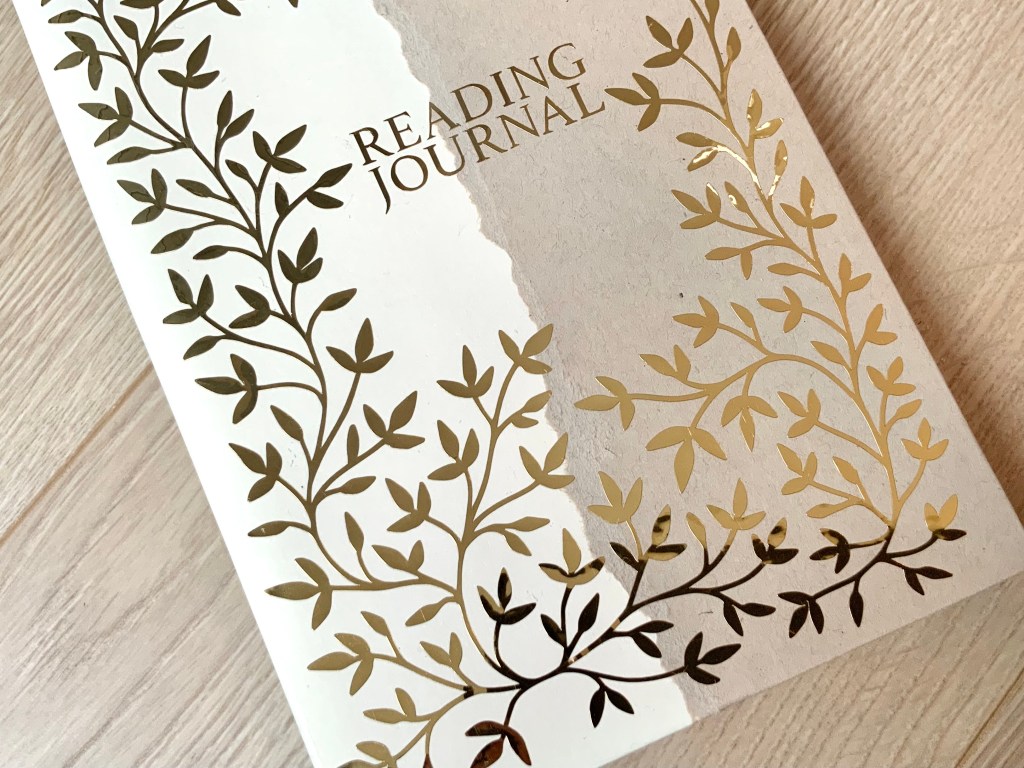
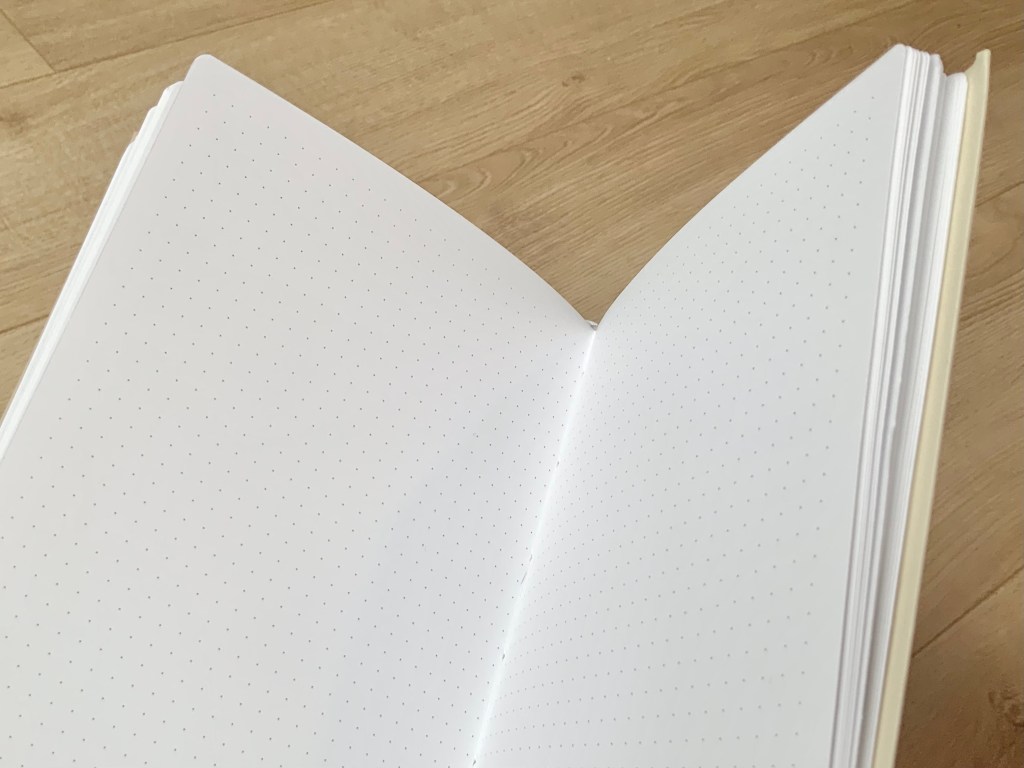
The quality of the paper inside your journal matters as much as the outer design: you want a reading journal with smooth paper so you can easily write all your thoughts, and with pages thick enough to avoid ghosting and allow crafting (more on decorating your spreads below!). I started hand-making my own journals to not only design original covers but also to choose my own high-quality paper inside. If that’s just as important to you, you can check out my current collection here.

Yearly Reading Journal vs. Continuous Reading Journal
Once you’ve chosen your reading journal, there’s two ways you can set it up:
A yearly reading journal starts fresh each calendar year, with goals and spreads dedicated to that year’s reading. It’s a great option if you love a clean slate every January.
A continuous reading journal, on the other hand, is one you keep adding to over the years, simply picking up where you left off. This works well if you want to track your long-term reading progress all in one place or prefer to completely fill your journal without worrying about how many books you’ll read in a given year.
I switched over to the continuous format last year because I was filling about a journal and a half each year, and didn’t want to leave half a notebook empty. For example, my current journal started in October 2024 and will likely carry me through the first half of 2025, so my setup spreads will reflect that and roll over to the new year.
Both approaches are valid—it’s all about what works for you and your reading habits.
The Setup: Must-Have Spreads for Your Reading Journal
Here are the spreads I include in my own journal, plus some tips to make them work for you.
Cover Page

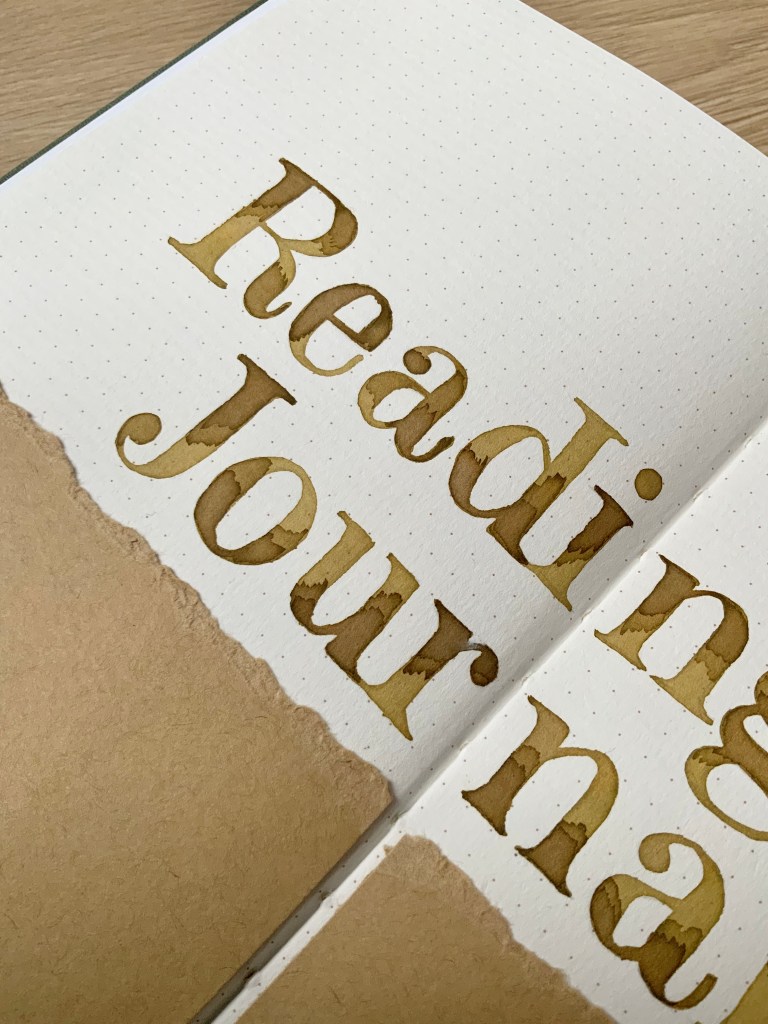
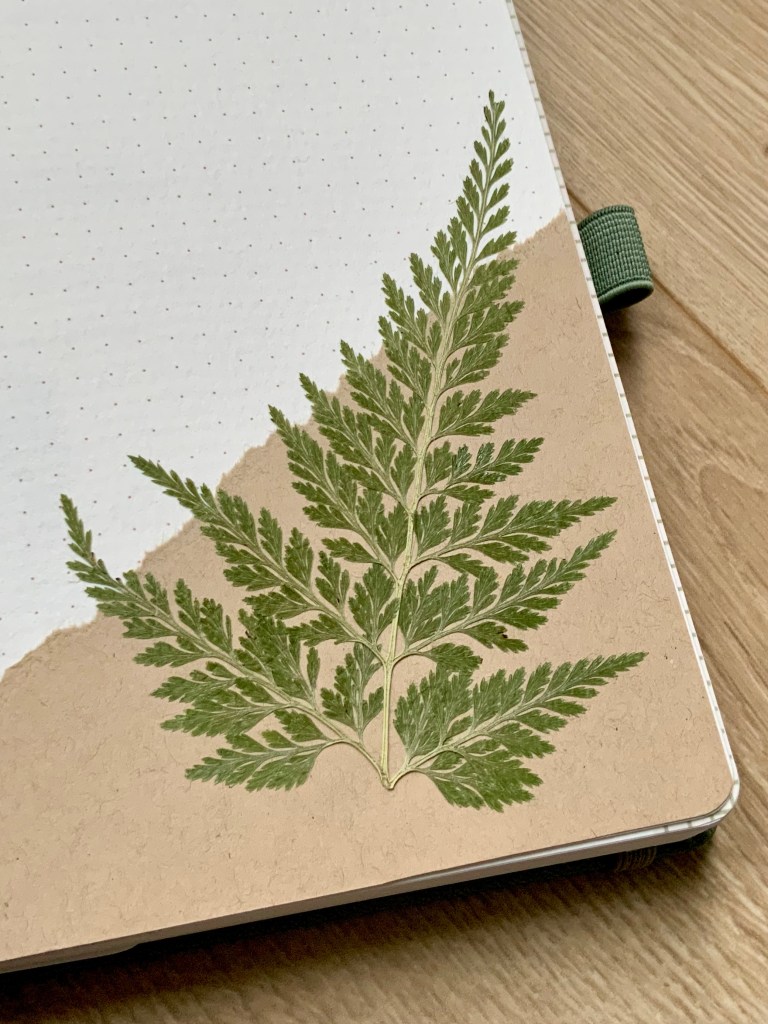
Let’s start with the fun part—the cover page. This is mostly decorative, but I love using it to set the aesthetic tone for the journal. Since most of my journal is simple and minimal, the cover page allows me to get creative. Think stickers, calligraphy, pressed flowers, or even ripped book pages for that bookish vibe.
To Be Read (TBR) List
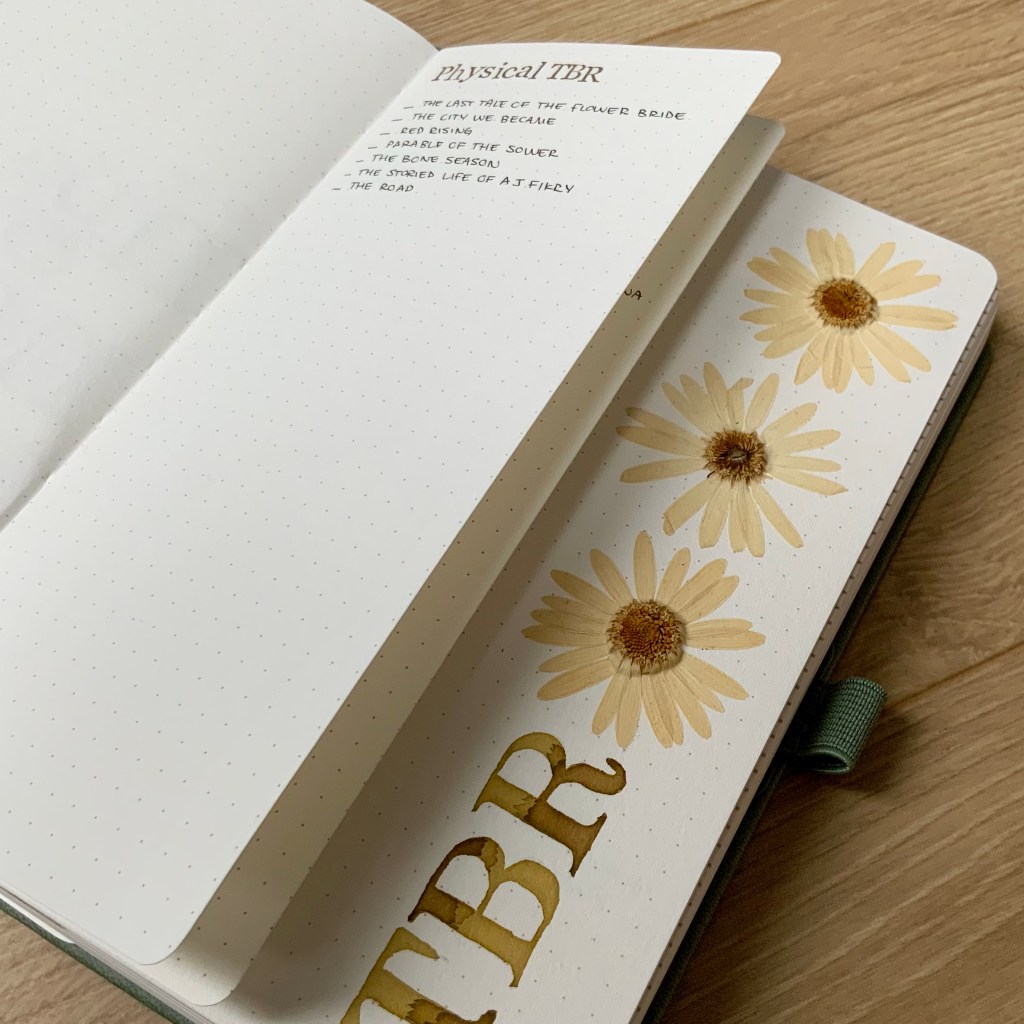
The TBR list is a classic spread: you create a list of books you want to read. I focus my own TBR on books I already own (physical or audiobooks), which helps me prioritize what I have before getting caught up in shiny new releases.
Tip: If your TBR is an ever-growing creature like mine but you still want to keep track of it in your journal, try breaking it into smaller, more manageable sections, like genres. This is also super useful for mood readers!
Anticipated New Releases
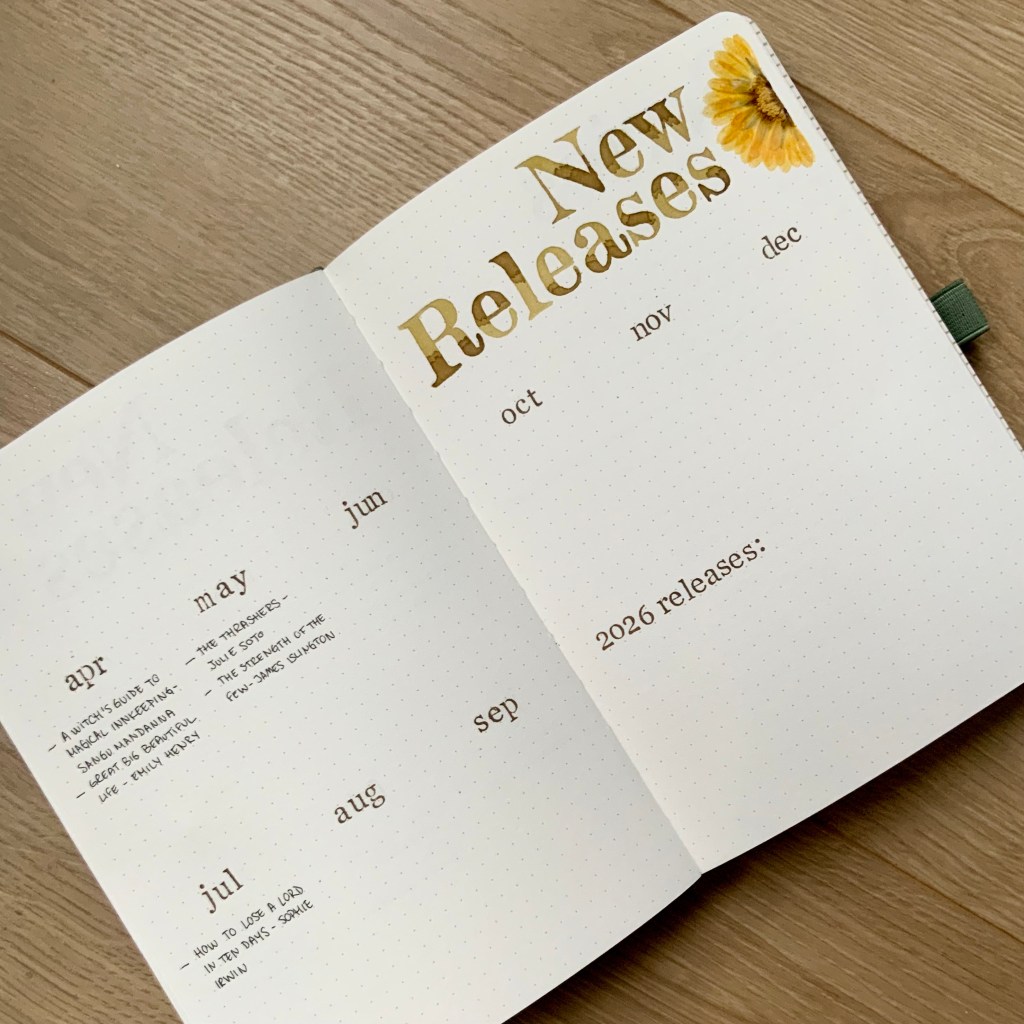
This spread is where I track upcoming book releases I’m most excited about. For me, this often includes sequels to series I’m currently reading or new releases from my favorite authors. I recommend setting this up like a future log, with a section for each month, so the books are listed chronologically and you can see what to get excited for each month.
Reading Goals
This is one of my favorite spreads because it keeps me intentional about my reading.
Yearly Goals: Each year, I choose a list of books I really want to prioritize. For 2025, for example, I’ll call this my “25 Books in 2025.” While I know I might not get to all of them, it helps me focus on books I’m genuinely excited to read.
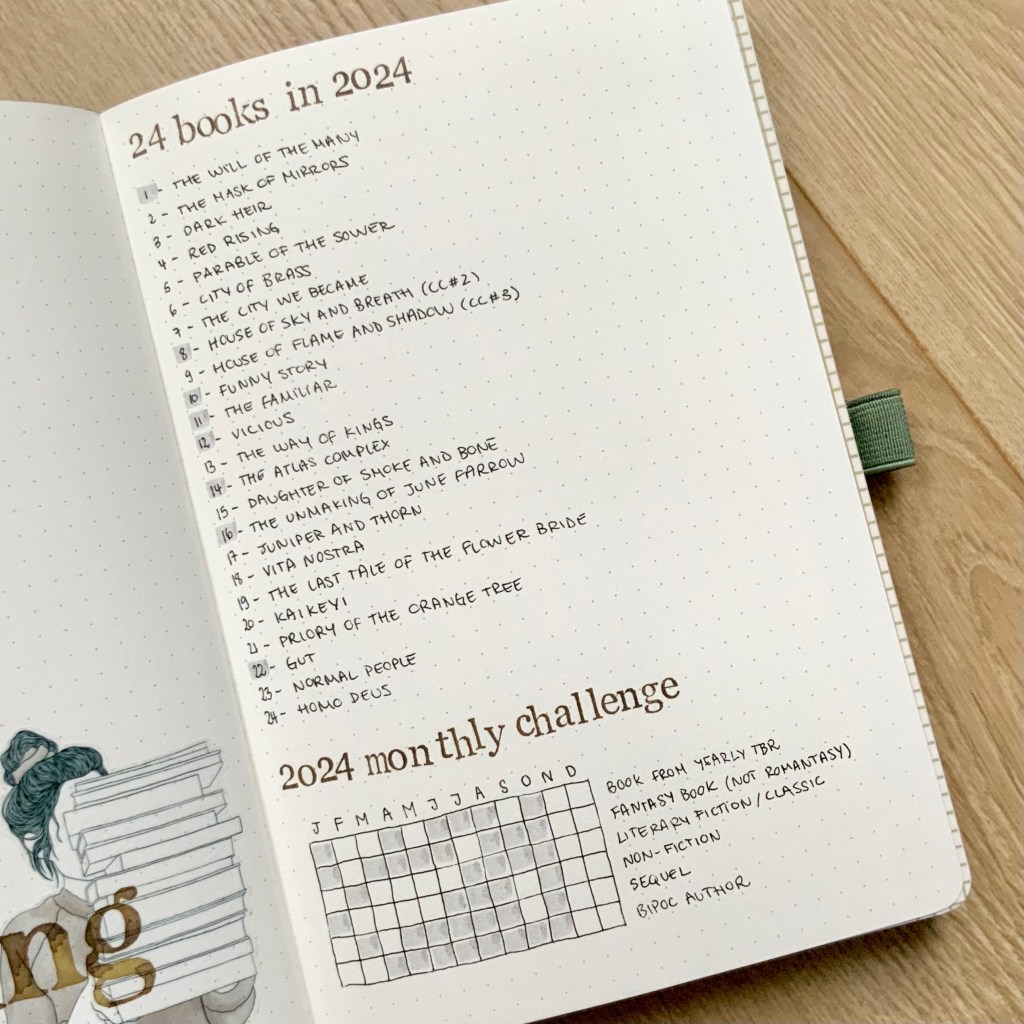
Monthly Goals: After analyzing my reading stats, I noticed trends I wanted to challenge (like neglecting literary fiction despite generally giving it high ratings, or not reading enough BIPOC authors). I set categories for each month to diversify my reading:
- A book from my yearly TBR
- A high fantasy book (that’s not romantasy)
- A literary fiction book or classic
- A non-fiction book
- A book by a BIPOC author
To avoid overwhelm, one book can check multiple categories—flexibility is key. Of course, you can set your own categories with your personal monthly goals! I turn this into a chart and check of the boxes each month – the result is super gratifying and motivating!
Series Tracker
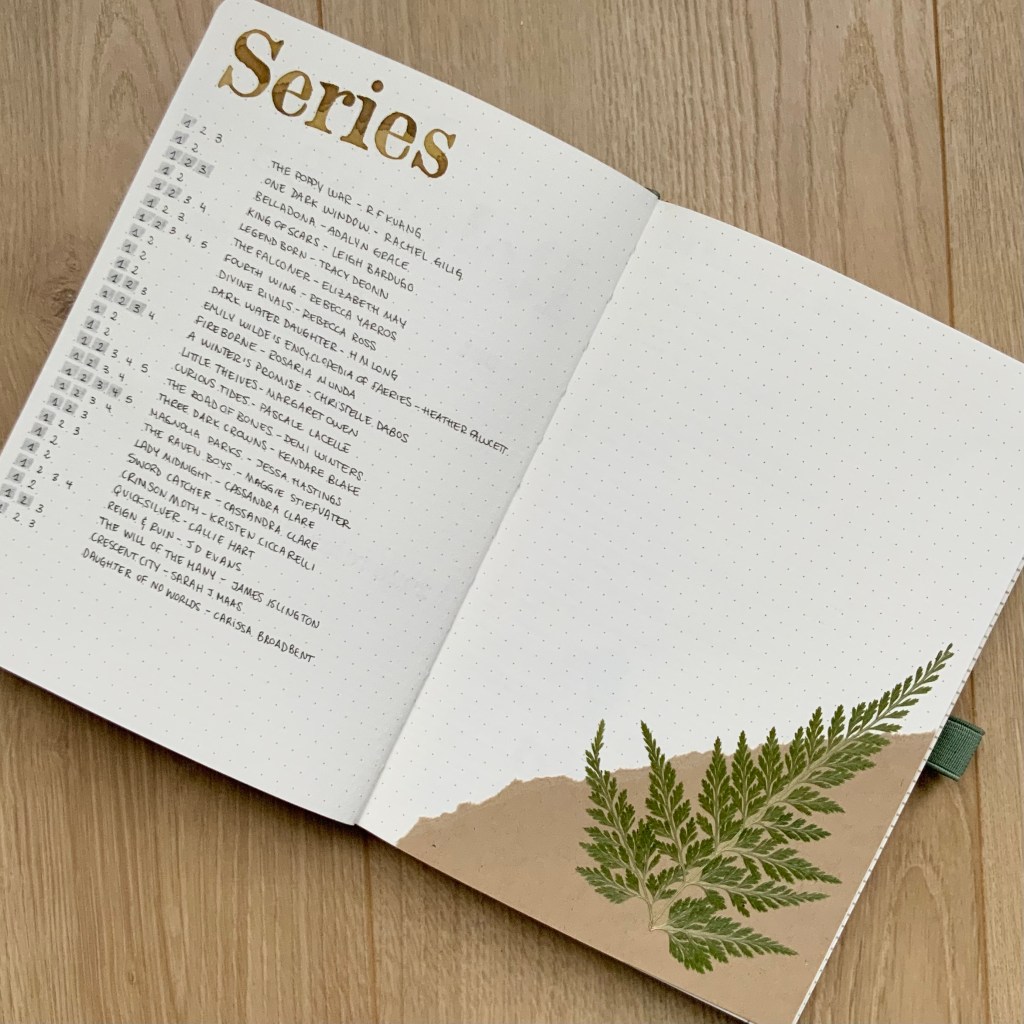
I’m a serial series starter—but I don’t always finish them. This spread helps me track the series I’m reading and prioritize finishing them before I jump into new ones (easier said than done, I know!). Just create a list of series and check-boxes for each book in the series, and voilà!
Index
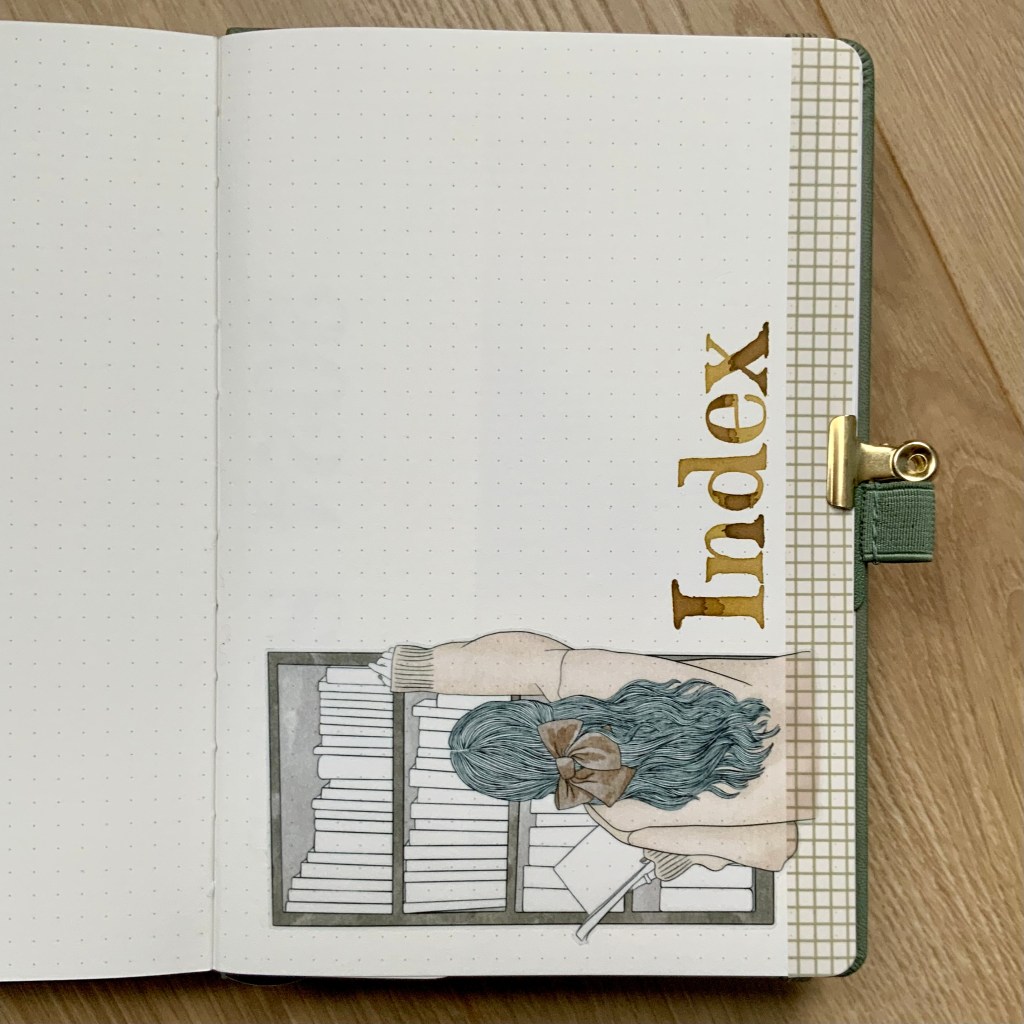
The index is purely practical: it makes it easy to find specific entries in your reading log, especially if you’re logging dozens of books over long periods of time. I number all the pages in my journal and list each book’s title, author and page number in the index. If you’re a visual person, you could also print out book covers to create the index.
Tip: I like to start the index from the back of the notebook and working my way forward. This way, I don’t have to predict how much space it will take.
More Spread ideas
If you’re looking for more setup spread ideas, here are a few extras you could include:
- Bookshelf Tracker: A popular aesthetic spread where people draw or print a bookshelf with empty book spines, coloring in each “book” as they finish one. It makes for a lovely overview of your reading at the end of the year!
- Reading Challenges: These are great for adding a gamified element, though I personally struggle to stick with these. Some examples I’ve seen including a reading bingo, the alphabet challenge, and the around-the world challenge.
- Book Club Spread: A spread to track your book club picks and discussions.
- Spending Log: If you dare! (I don’t include this—it’s better I don’t know.)
- Recommended by: A great way to log who recommended what book on your TBR.
- Book Brackets: A fun way to narrow down your favorite book of each month, then your favorite of the year by setting each month’s favorite in competition with the others.
- Author Tracker: If you aim to read all your favorite author’s backlog, this is a great way to record your progress.
- Daily reading tracker: A good way to transform reading into a daily habit is to include a tracker to visualize your running streak. Check out my daily tracker sticker to create your spread more easily.
Tracking Your Reading: the Reading Log
What I call my “Reading Log” is the heart of my journal—where I log every book I read. There are tons of ways you can do this, and ultimately the best way is whatever works for you – What do you want to remember about the books you read? What data do you want to keep track of? How much time and effort do you want to put into logging each book you read? Your reading log can be a simple list of books and ratings, or it can be a fully decorated double spread for each book you read.


My approach falls somewhere in the middle: I dedicate one page to each book I read – depending on the book, I might only write a couple of sentences, or I might have enough thoughts to fill multiple pages. I also keep these spreads super simple and functional. I love a decorated spread, but it also takes time and I want to avoid any hurdles to keeping up with my reading journal.
For each book, I recommend including:
- A small printout of the book cover (I’m a visual person, and covers help me remember books better than titles alone).
- Key details: title, author, genre, format, and publication date.
- Your rating.
- Notes, quotes, and impressions. This can be whatever you want to remember— from predicting plot twists to rambling about how a book made you feel.
Tracking Your Reading: Reading Stats
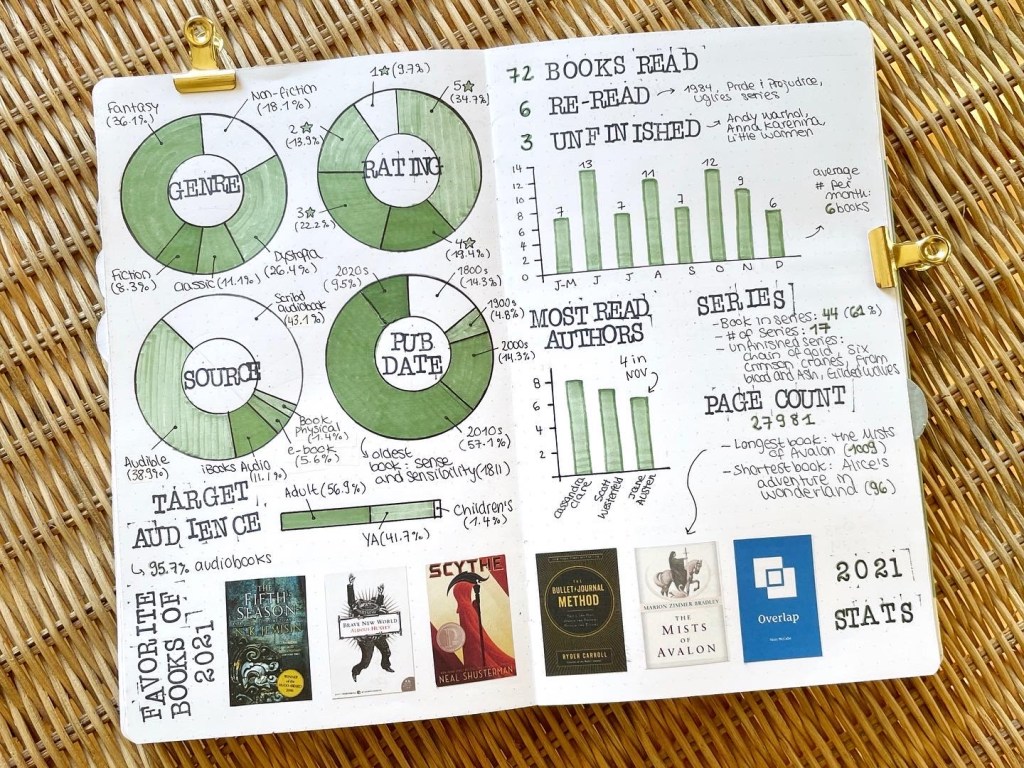
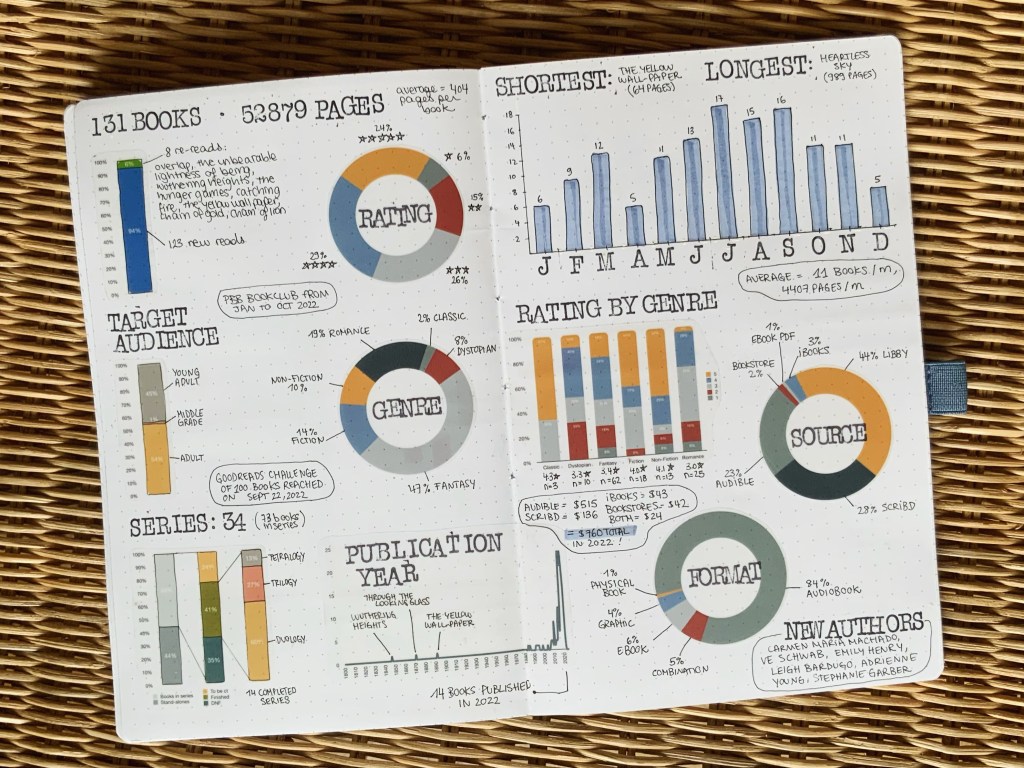
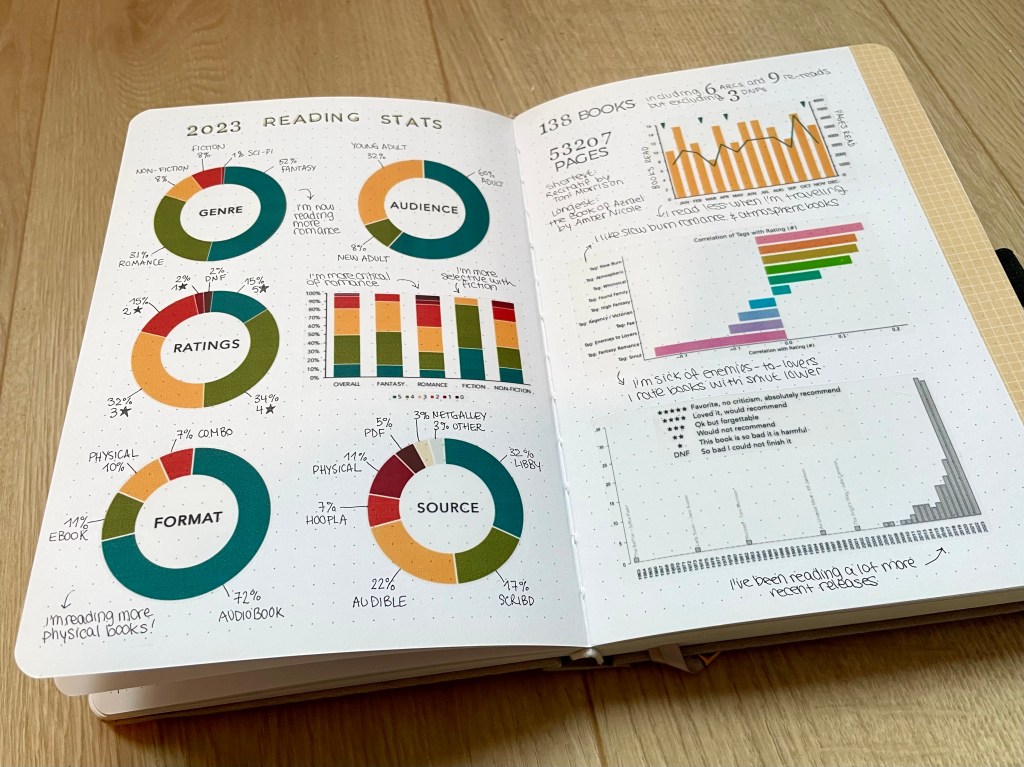
This is a nerdy-fun way to analyze your reading trends at the end of each year. If you’re a heavy reader, you could even do this on a monthly basis or include a recap every 10 books so you can continuously reflect on your habits throughout the year. If you want some ideas of what stats to track and how to analyze them, check out my reading stats post here!
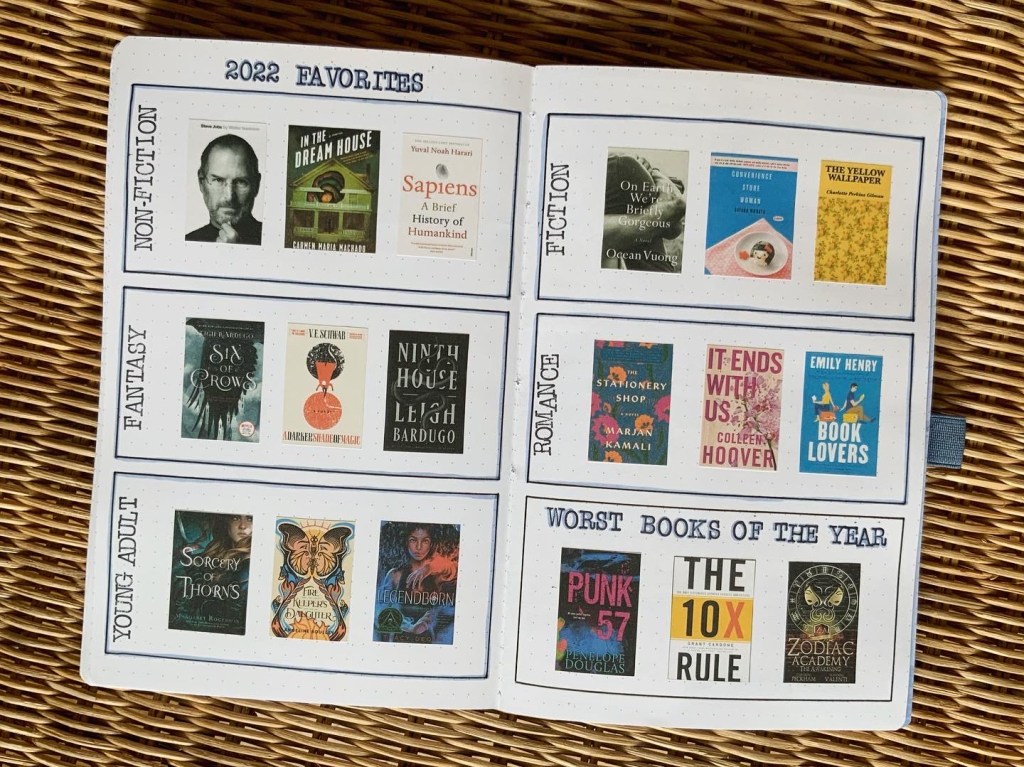
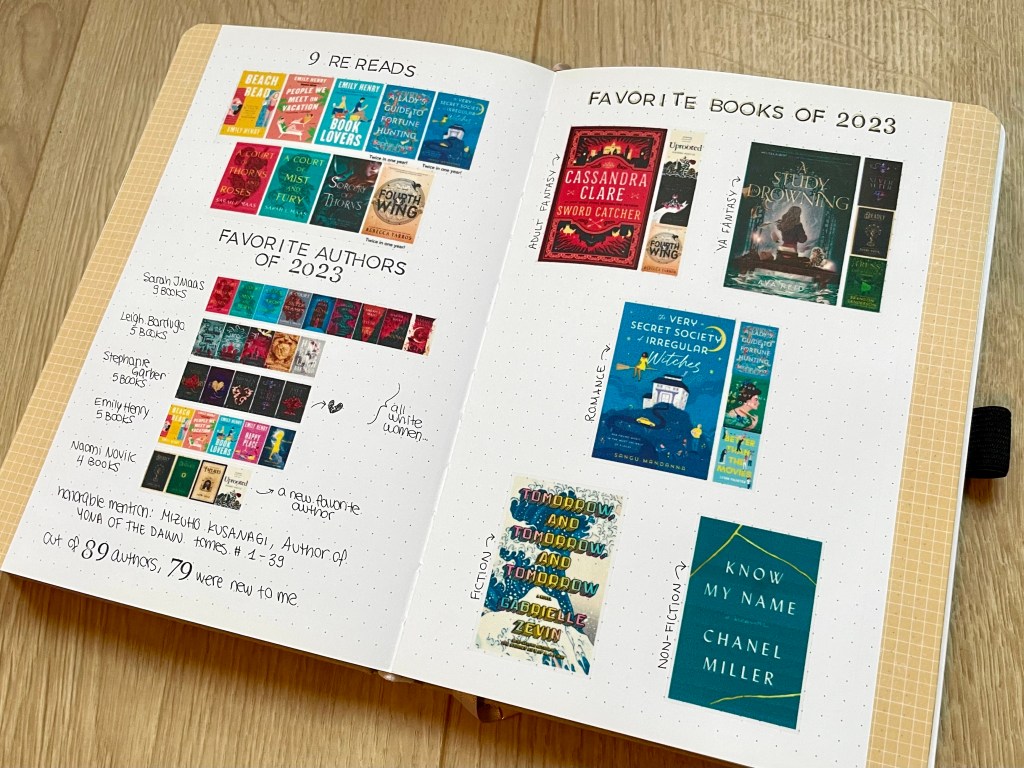
Here are some examples of my reading statistics across the past few years:
Aesthetics & Decor
For my own journals, I like to add just a touch of pretty to make the journaling experience more fun. This means that while my reading log is purely functional, I will put a lot more effort into my setup spreads. I find this is a good way to decorate my reading journal without it becoming overwhelming.
To create a consistent aesthetic throughout your journal, choose 3 decor elements to use throughout—this year, I used my bookworm stickers, a neutral ink for my headers, and pressed flowers. Another way to do this is to restrict your color scheme to only a few colors (ie. I used neutrals, green and yellow). For the rest of the year (ie. the reading logs), I stick to one pen and one highlighter to avoid creating a barrier to journaling regularly.
That said, I love seeing spreads where people match the aesthetics of their books with fan art, collages, or stickers. If you’re looking for bookish materials to decorate your journal, here are some ideas:
- Bookish stickers from small creators on Etsy, there are tons of beautiful options of book-themed designs (including my own bookish stickers!)
- Pressed flowers or flower stickers add a natural, delicate touch to any layout
- Ripped book pages and tea-stained paper can create a lovely old library vibe in your reading journal. I’ve also seen people combine this with aesthetic images from Pinterest for a scrapbook decor style.
- Stamped headers. I love the old-school typewriter look of this alphabet stamp set for a reading journal, but if you want a more classic font I also really like this one.
- Calligraphy is the perfect touch to elevate quotes or important notes in your reading log. You could also create the same effect by switching to a colored or metallic pen, or highlighting and underlining sections.

Let me know if you try any of these spreads and tips—or share your own ideas! I’d love to see how you set up your reading journal and keep your reading habit strong for the new year!

 Petites Pensées Papeterie