


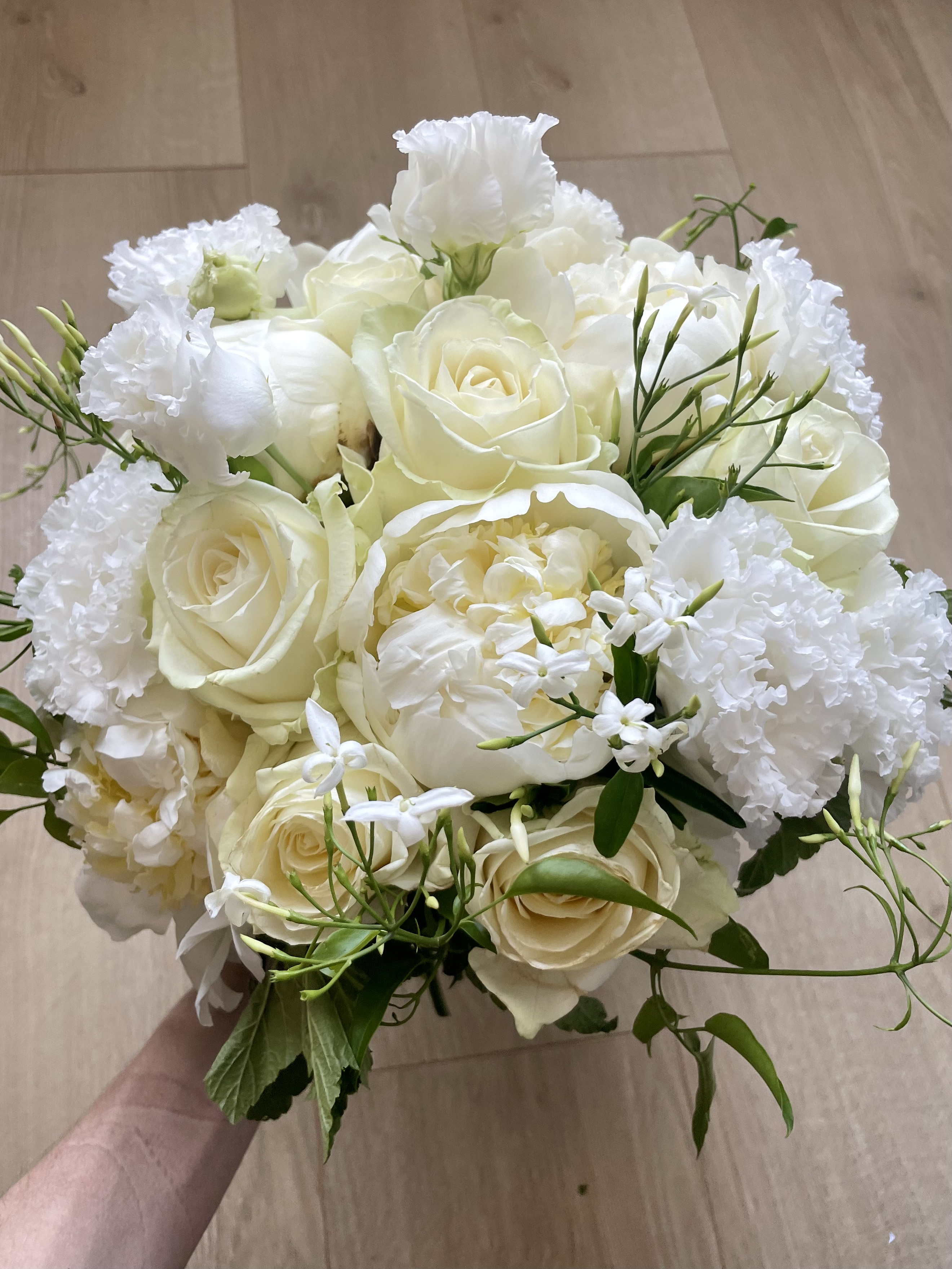
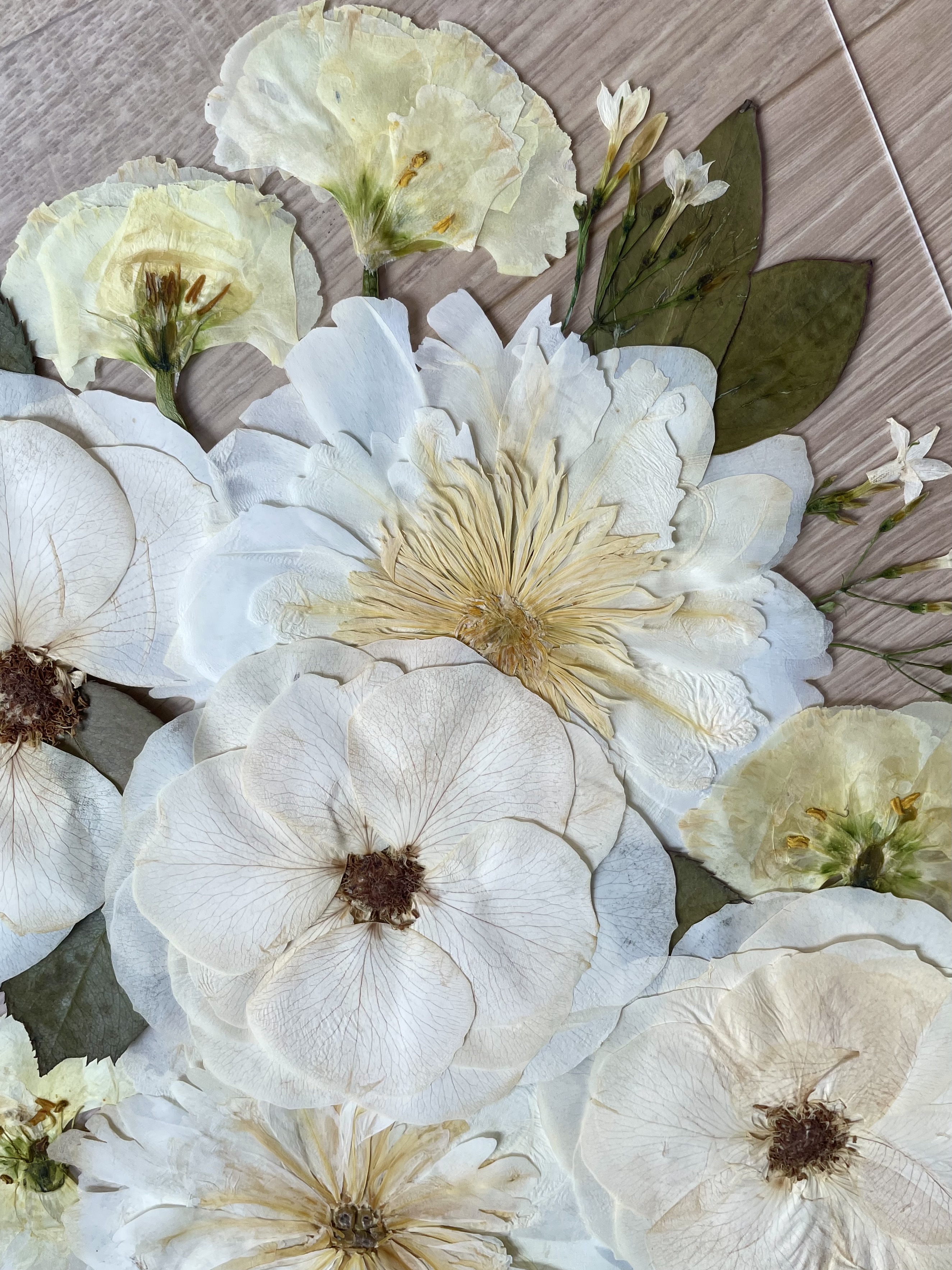
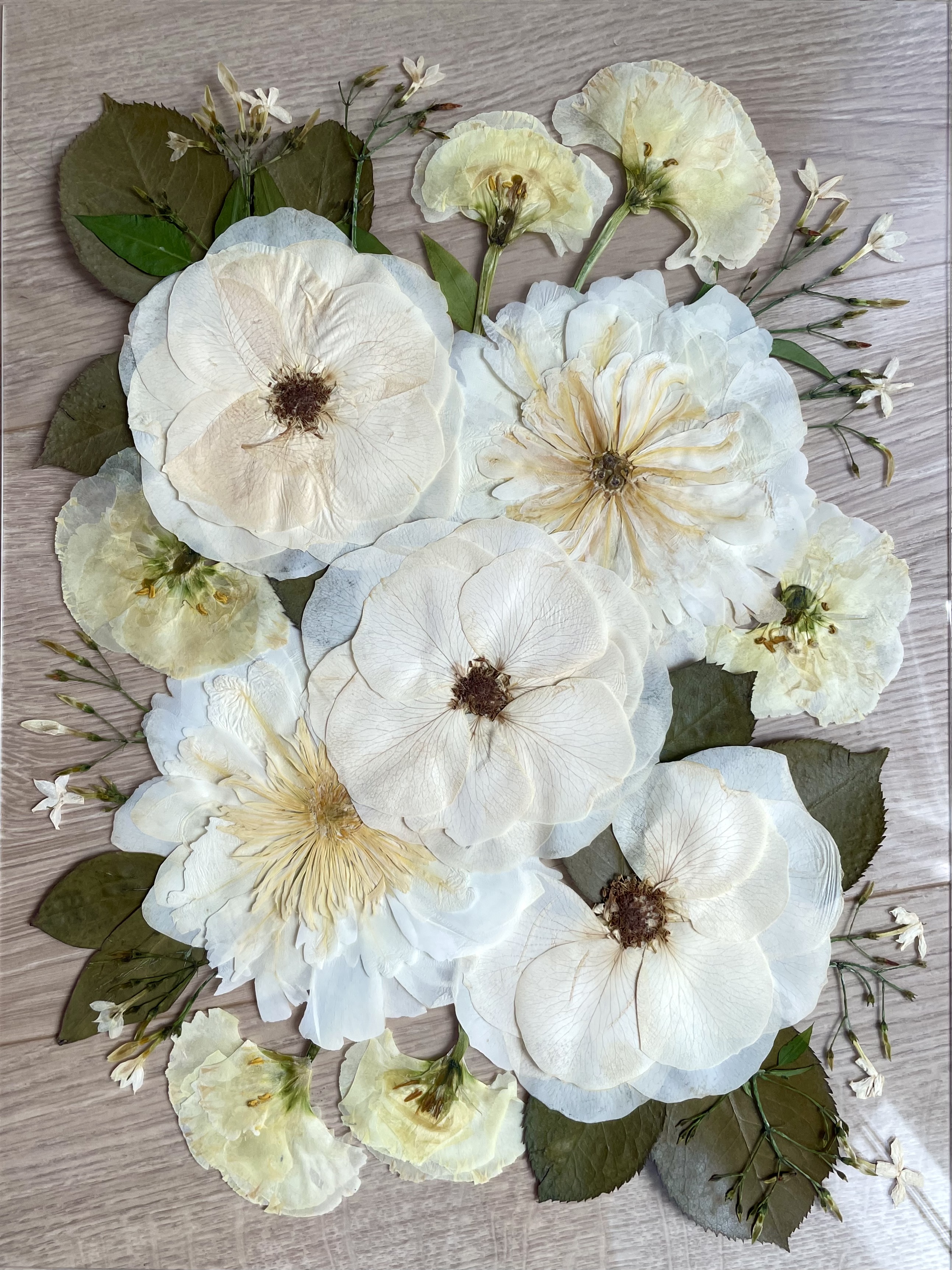
Preserving your living, three-dimensional bouquet transforms it into something delicate, two-dimensional and most-importantly: long-lasting. Through this process, colors may deepen or soften; some petals become almost translucent; others open up to reveal shapes that might surprise you. Here’s a glimpse into what that transformation looks like with the most popular bridal flowers:
Pressed Roses
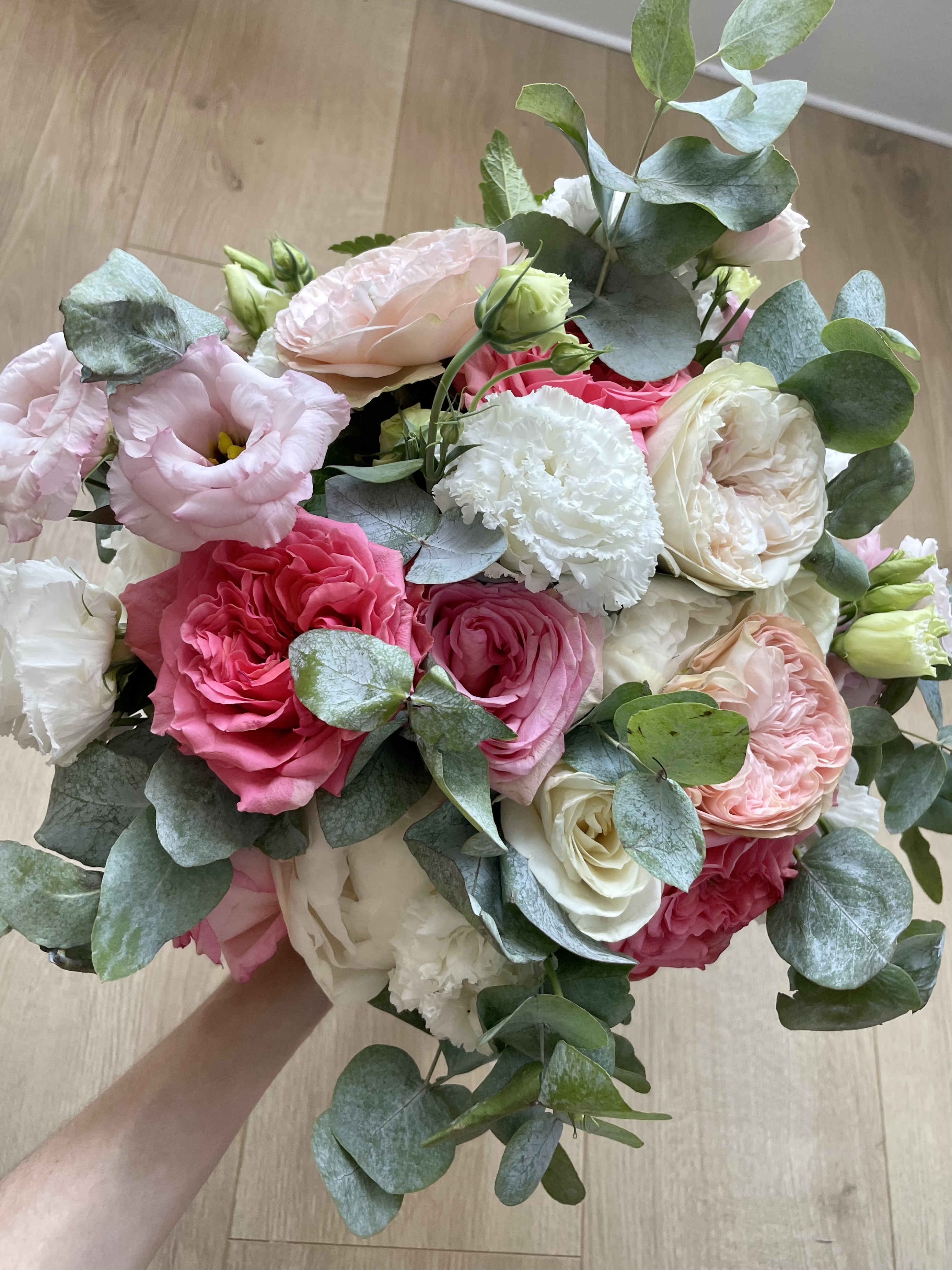
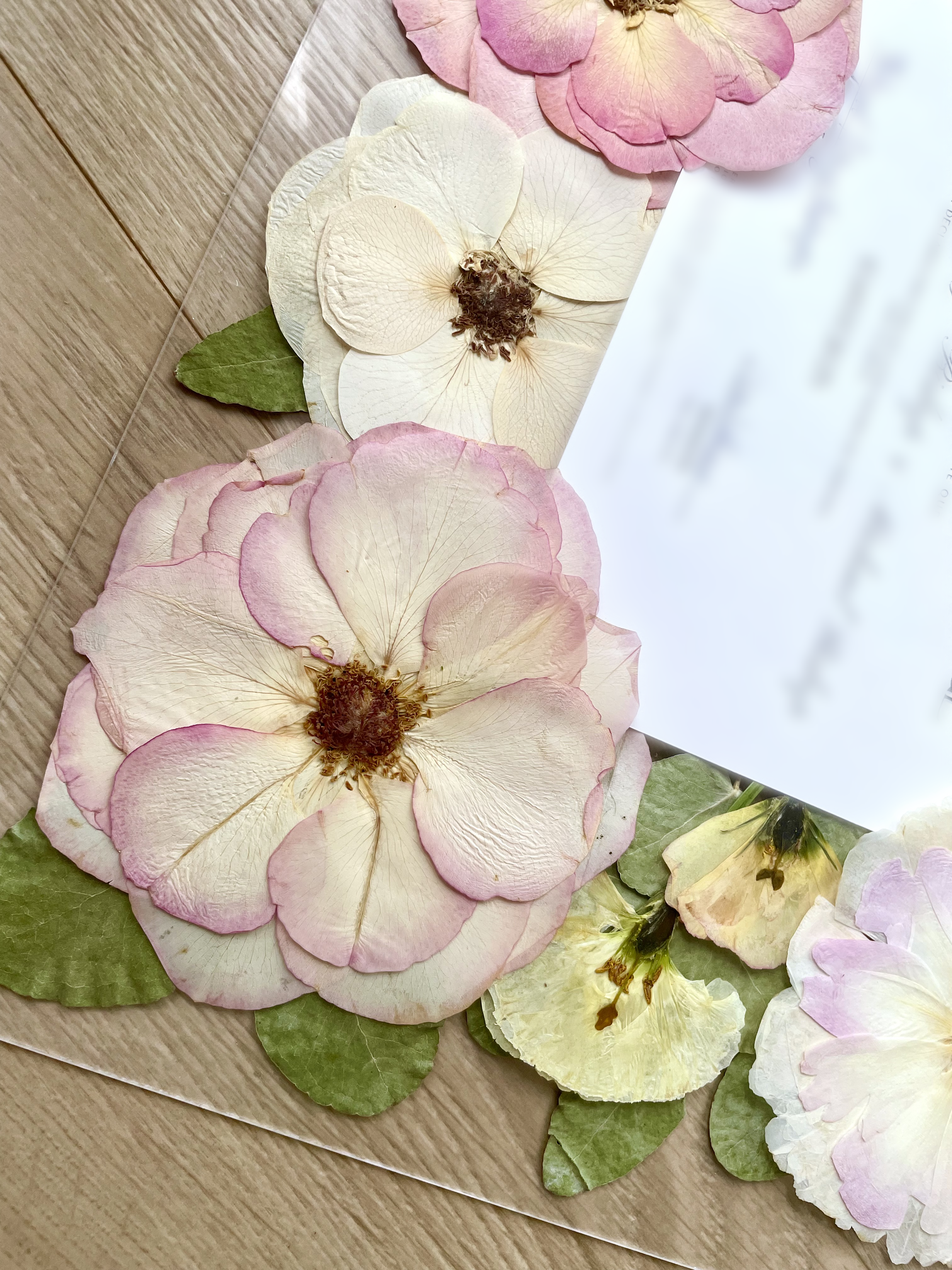
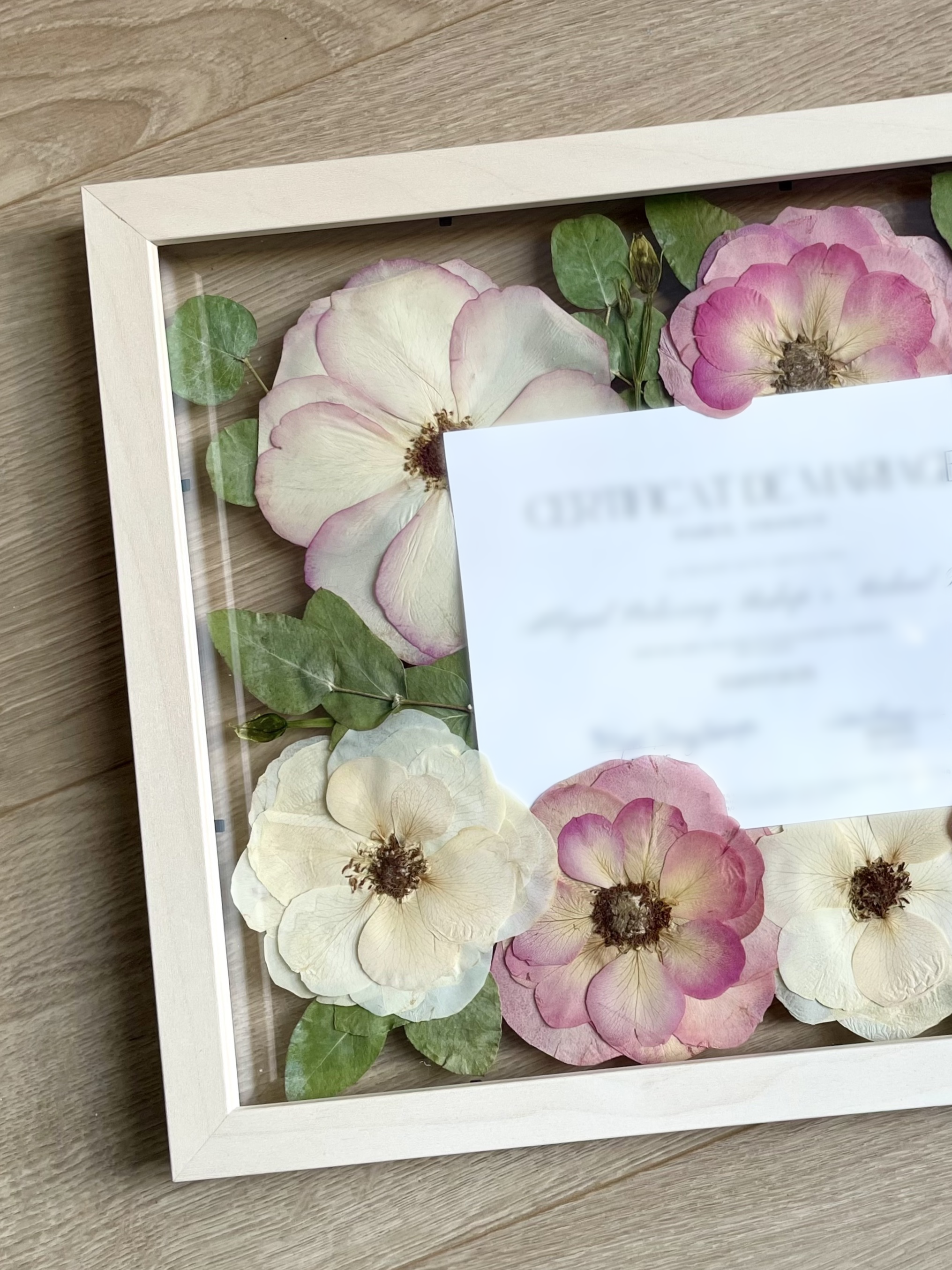
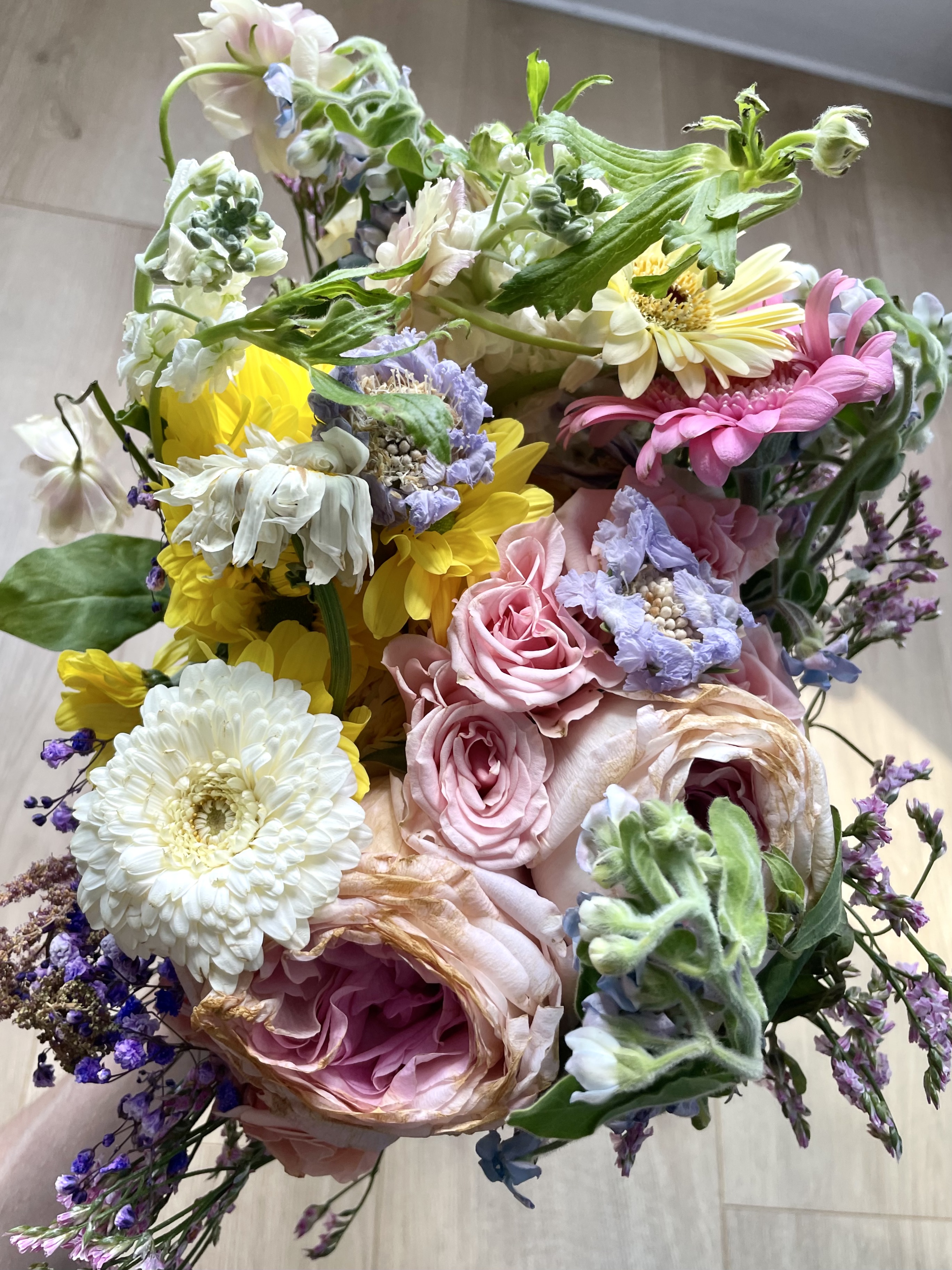
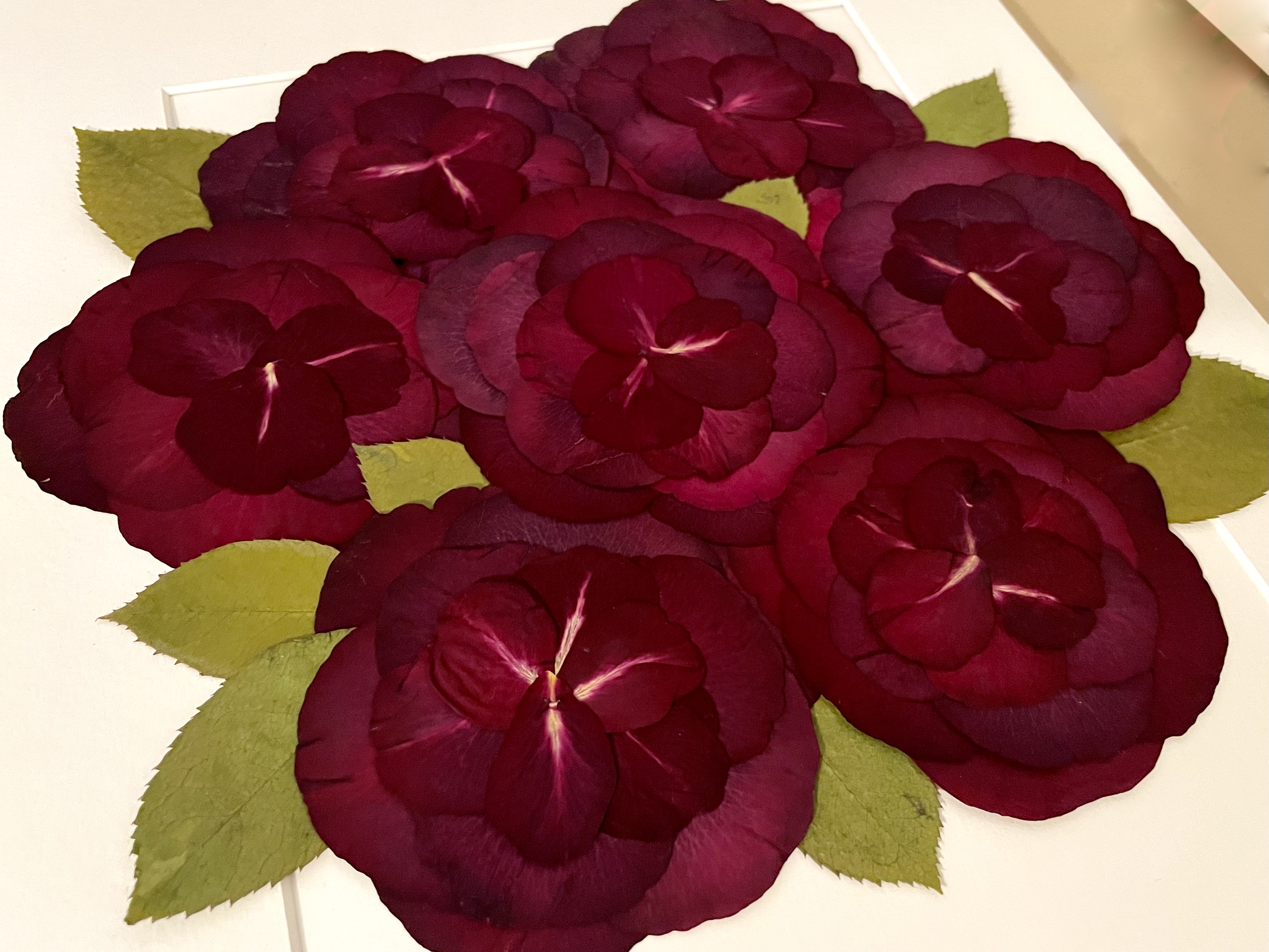
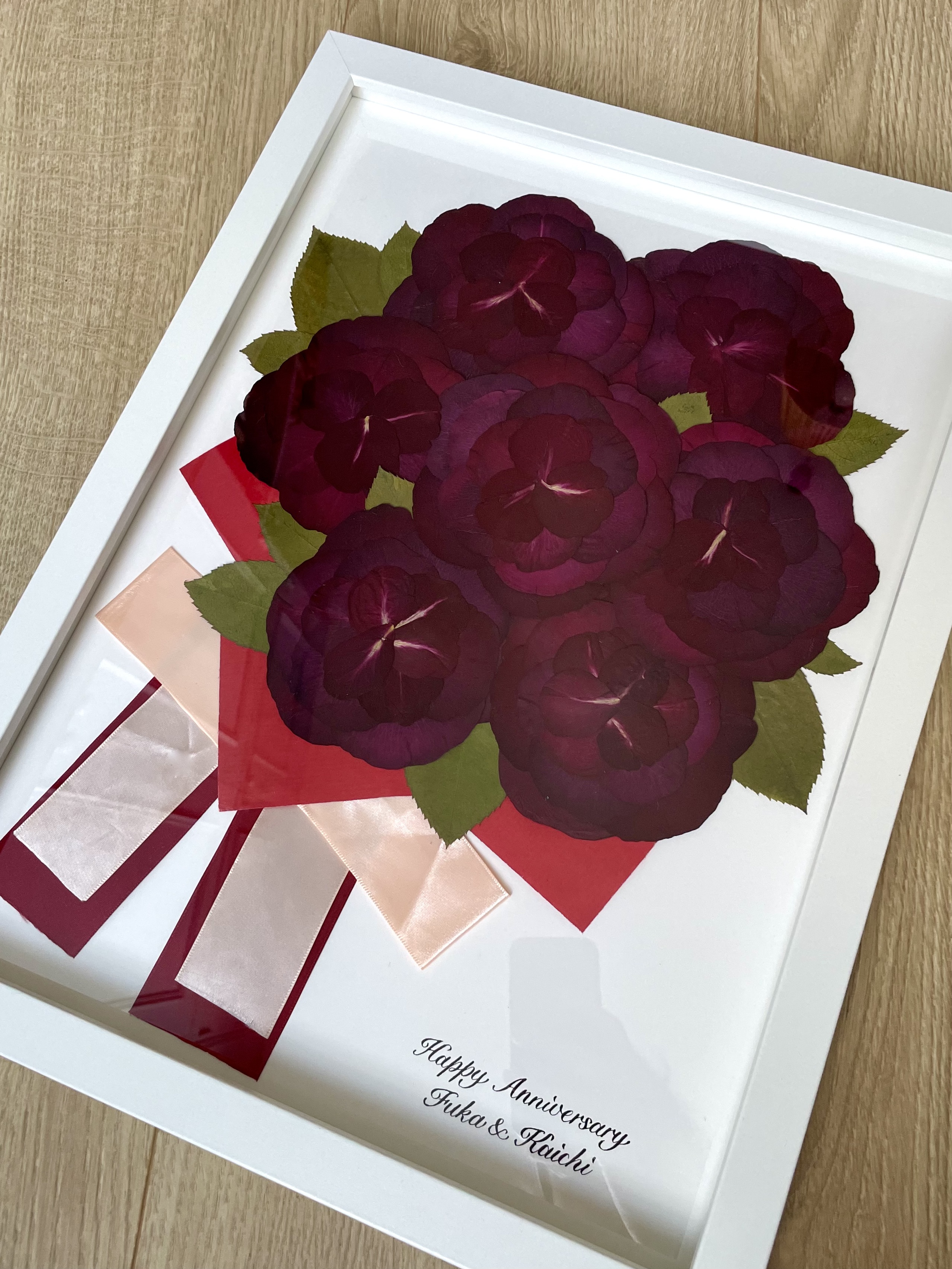
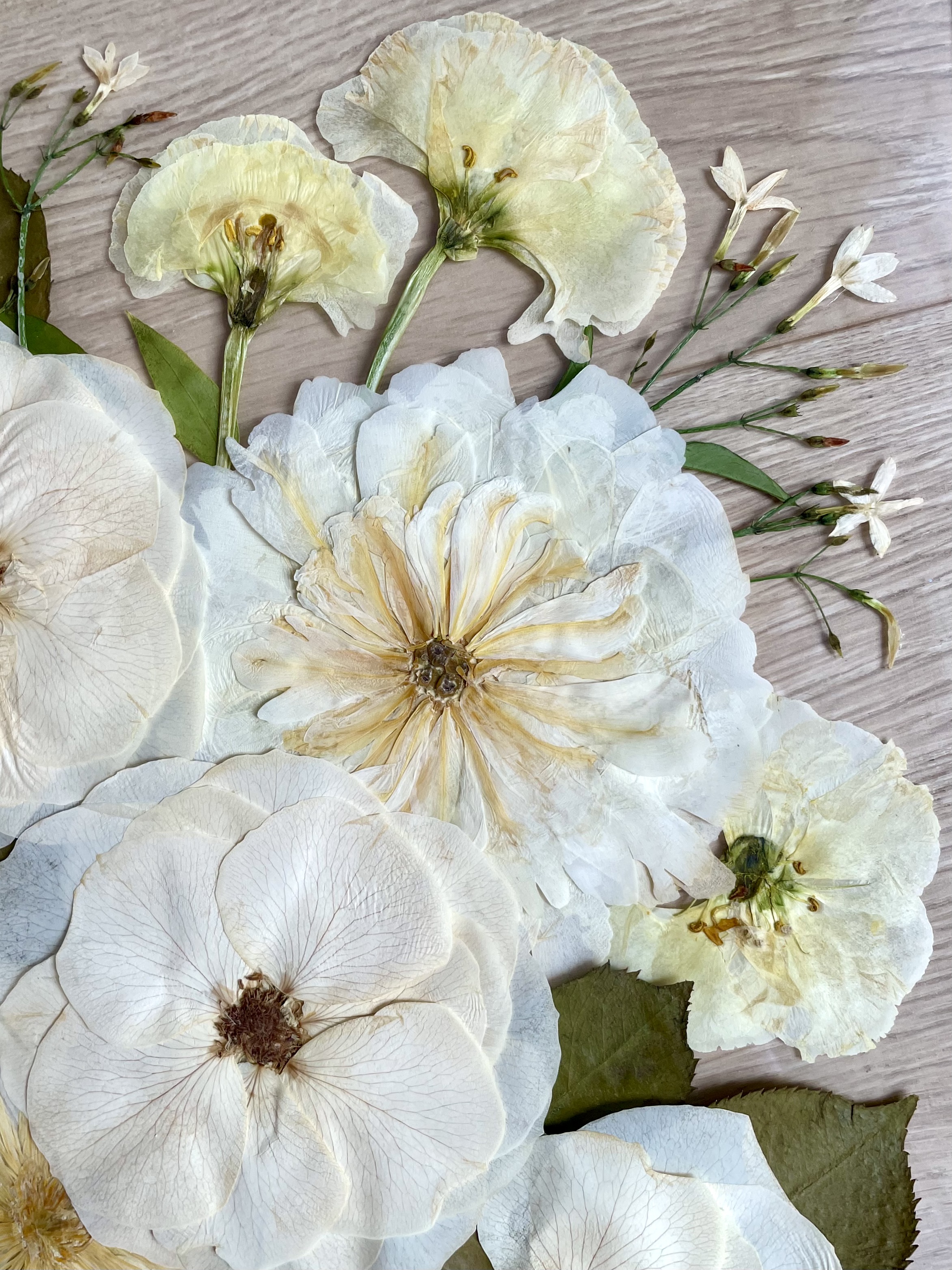
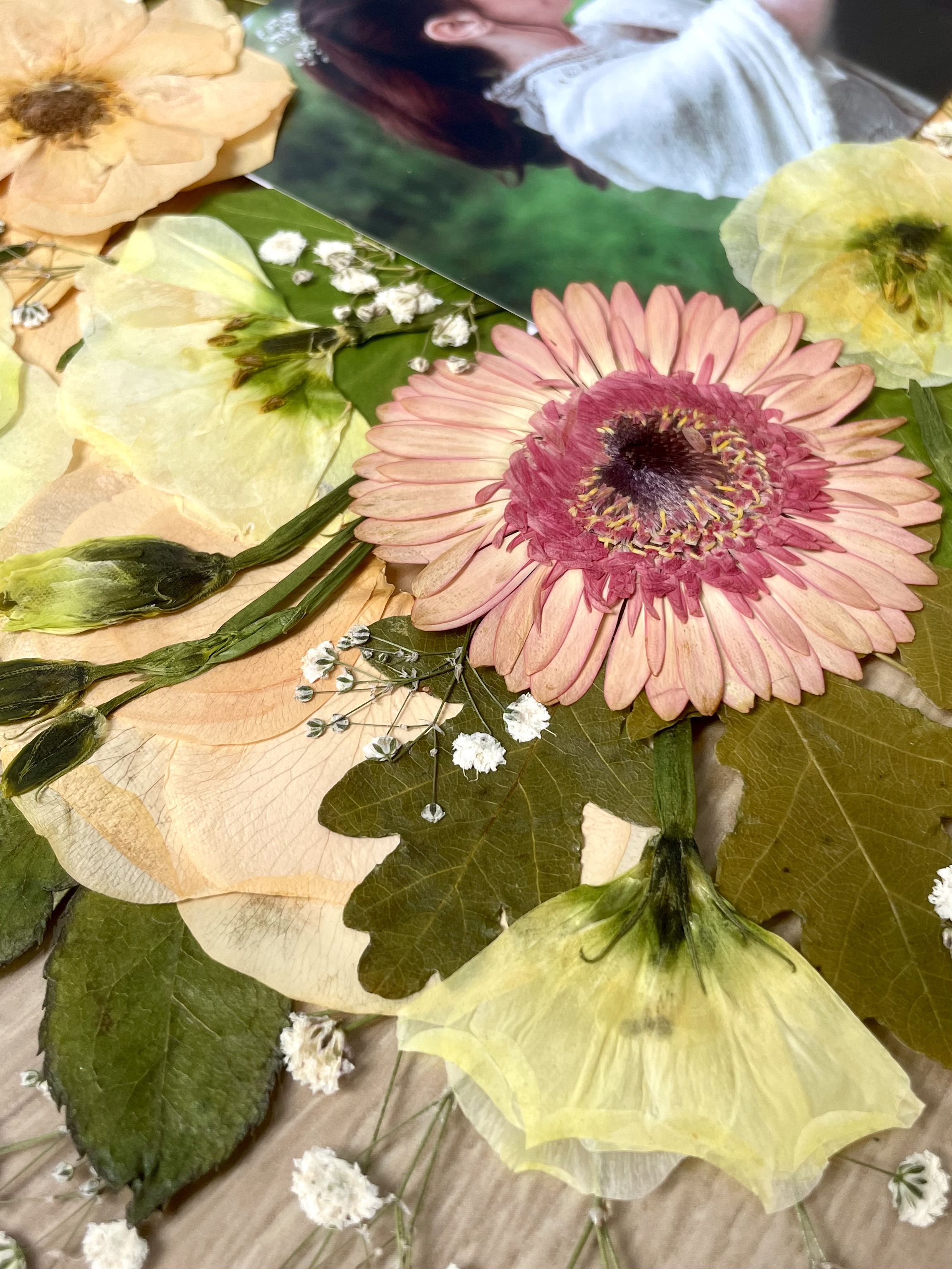
The quintessential wedding flower, and one that presses beautifully. Roses tend to slightly shift colors during the pressing process: reds deepen, while pinks and whites shift toward ivory. Yellows hold their color beautifully, but may gradually fade over the years. Pressed, roses open and take on a delicate form that looks different from the original, but just as lovely. They can also be deliberately arranged into more graphic compositions, as in the last images below.
See more examples of pressed roses
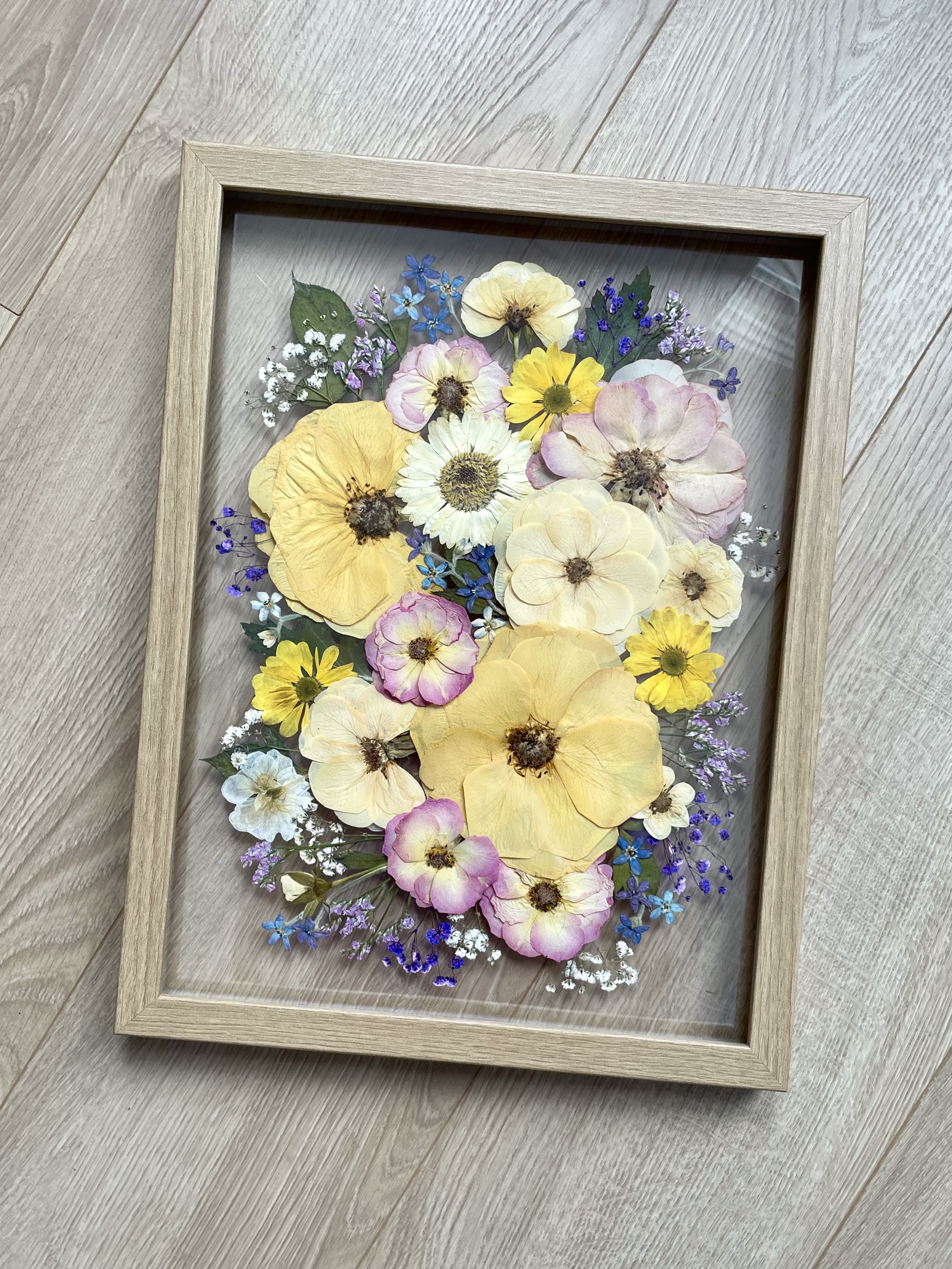
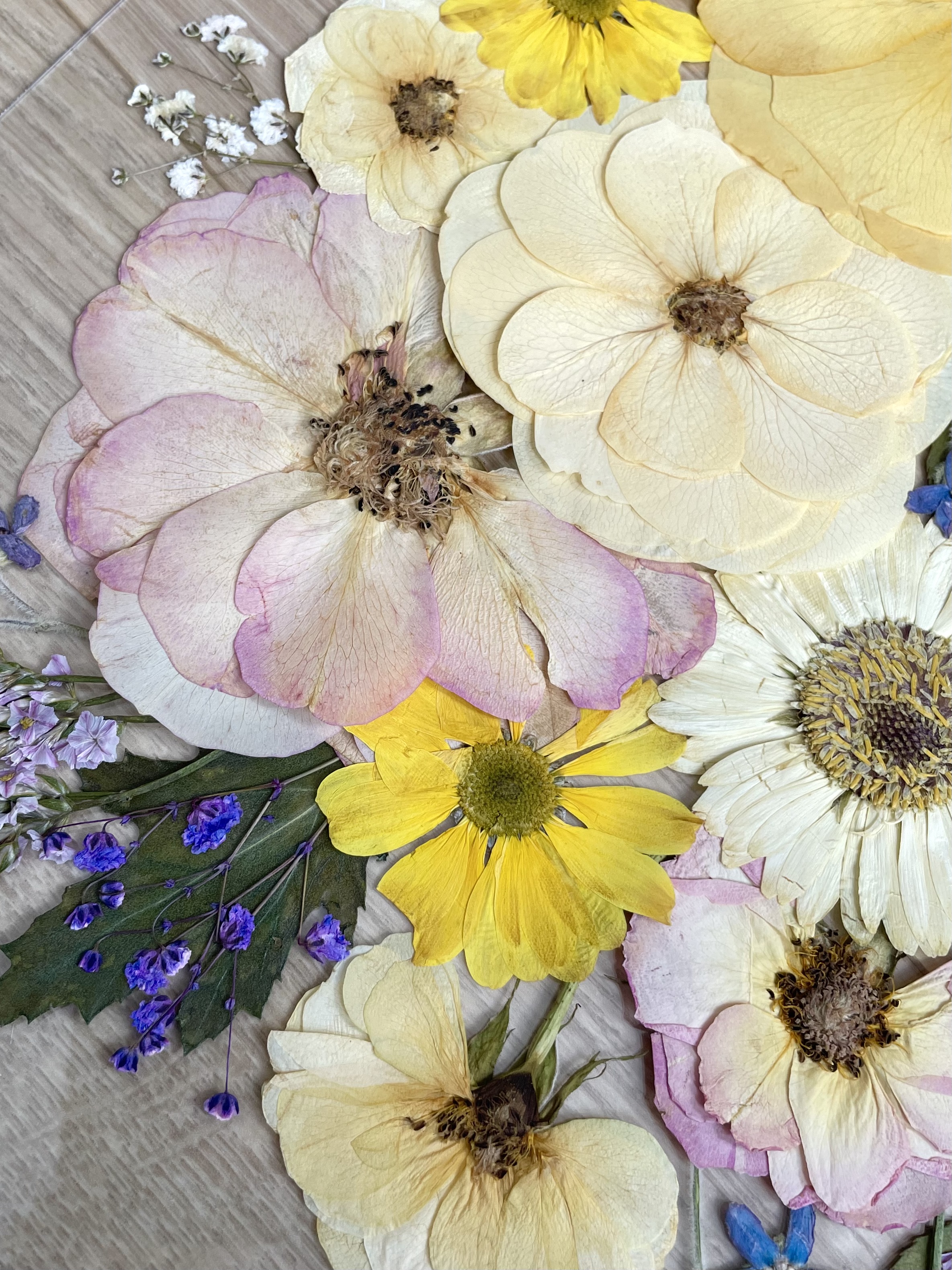
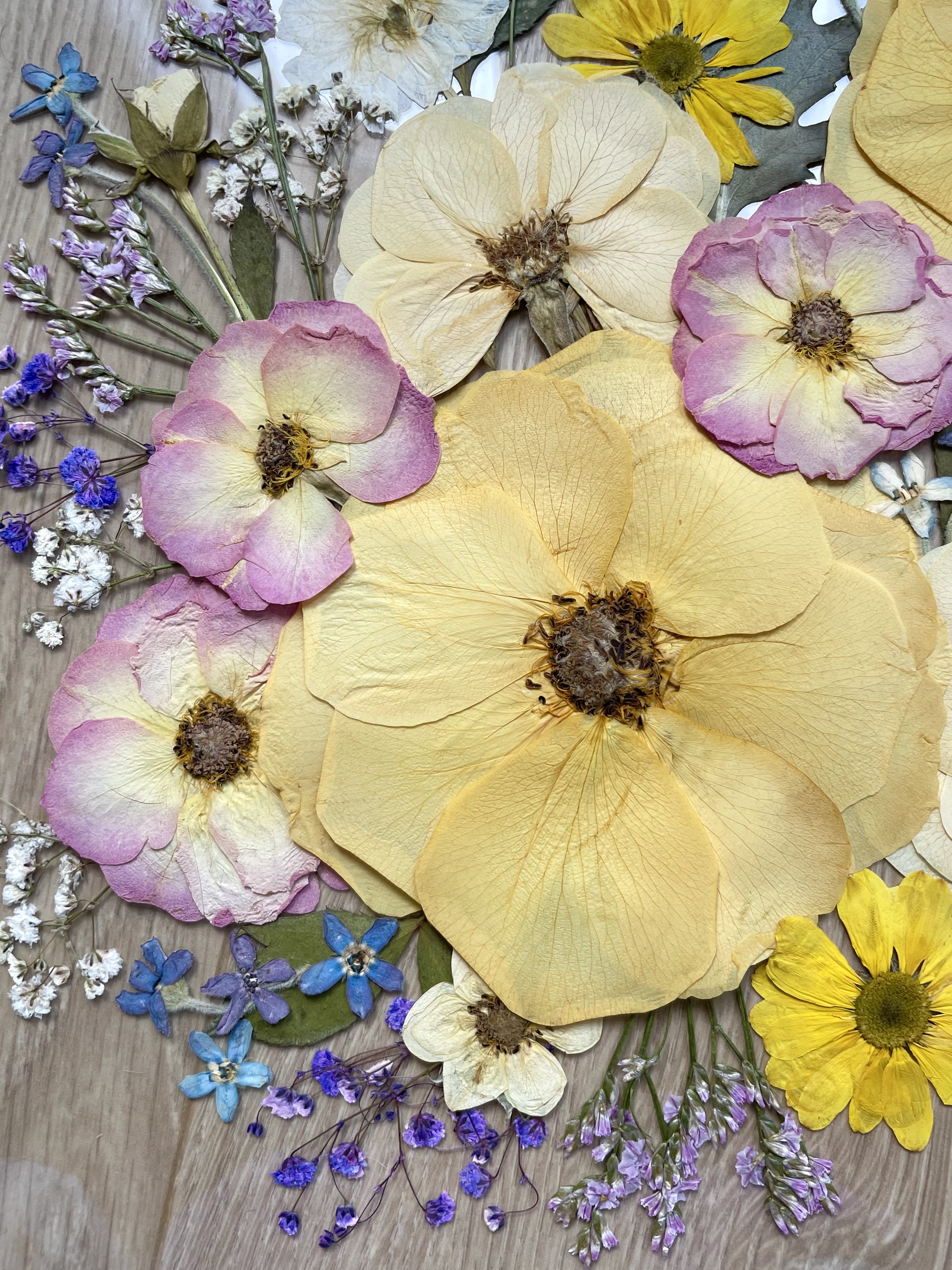
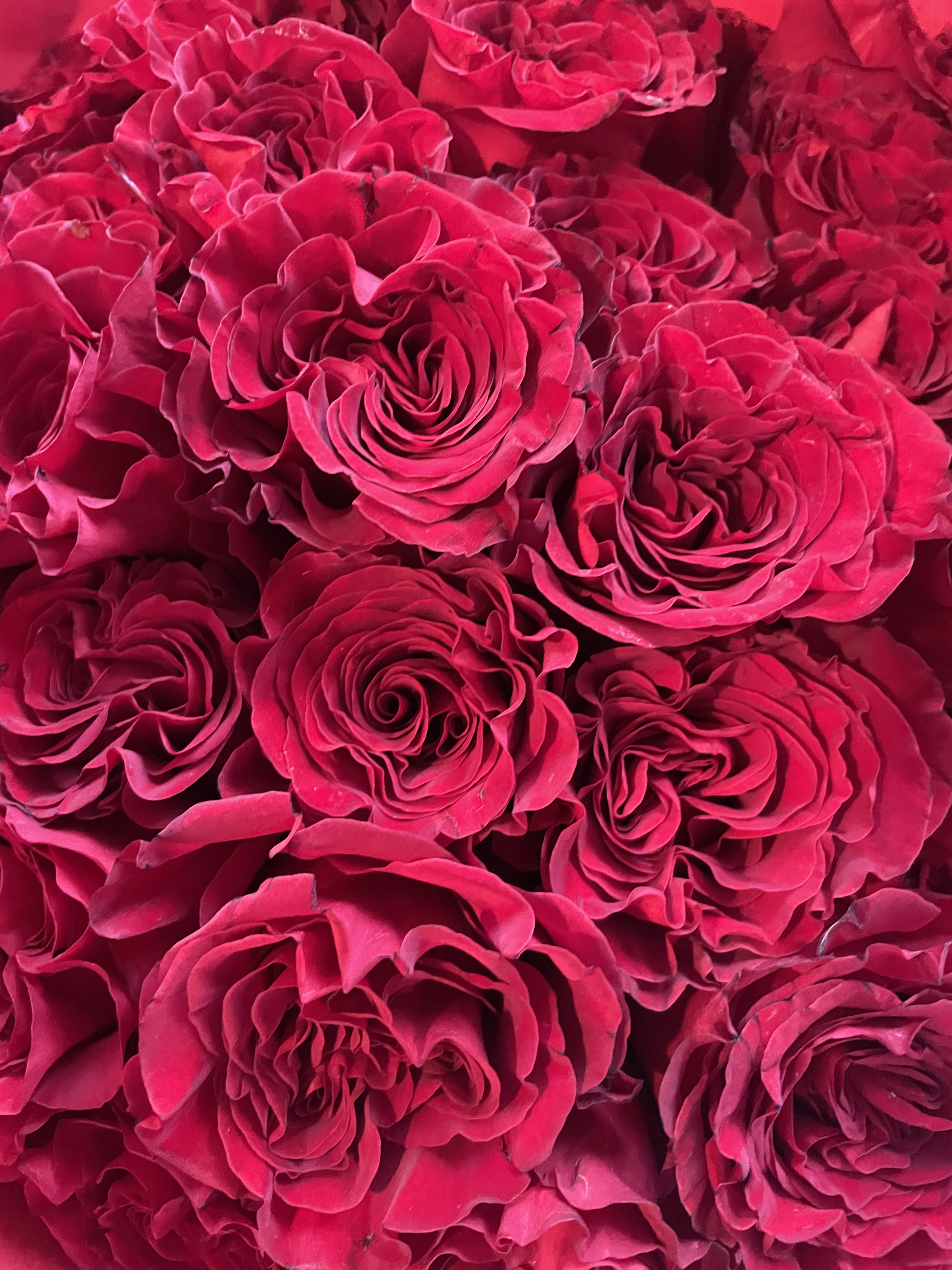
Pressed Peonies
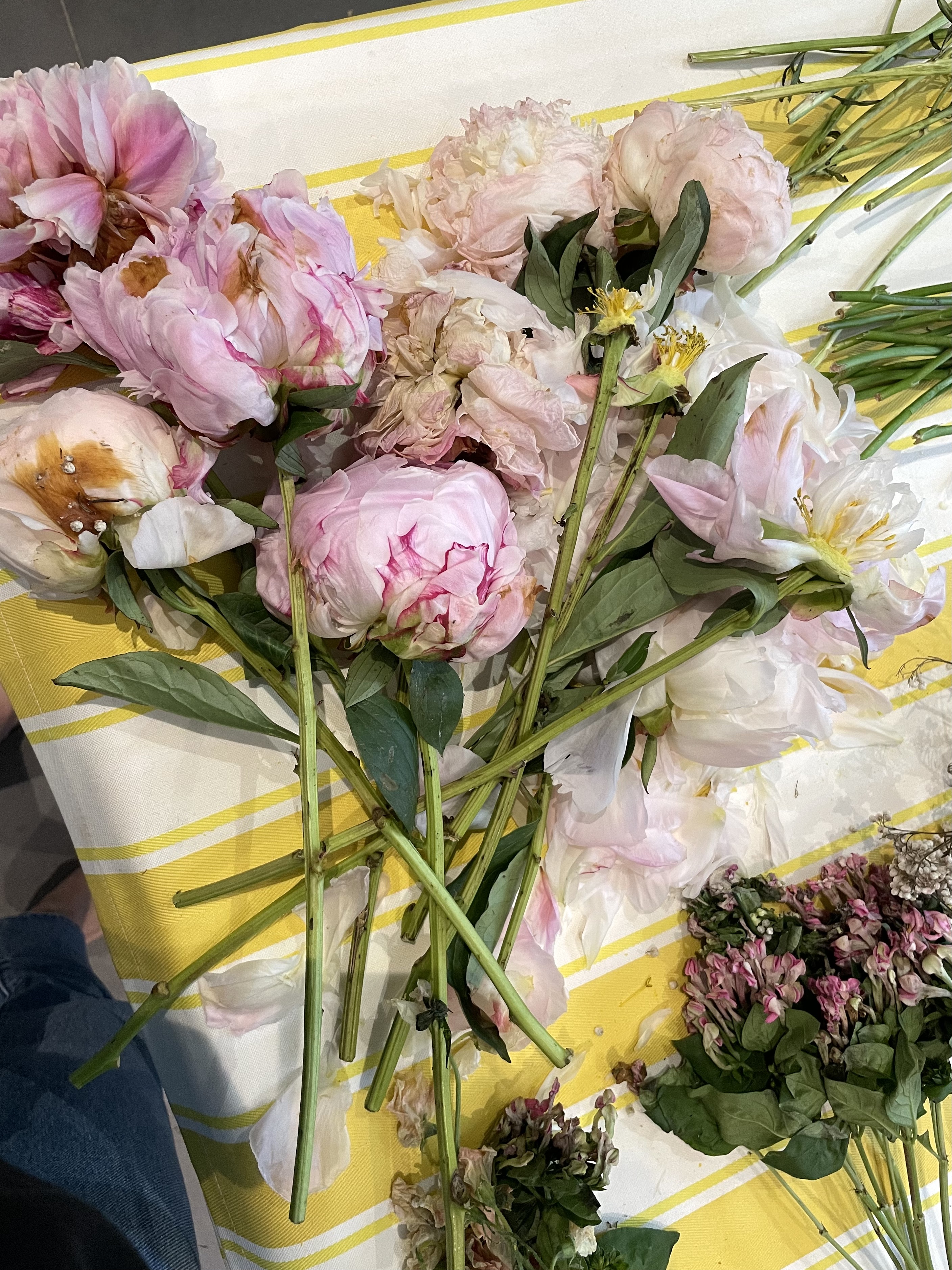
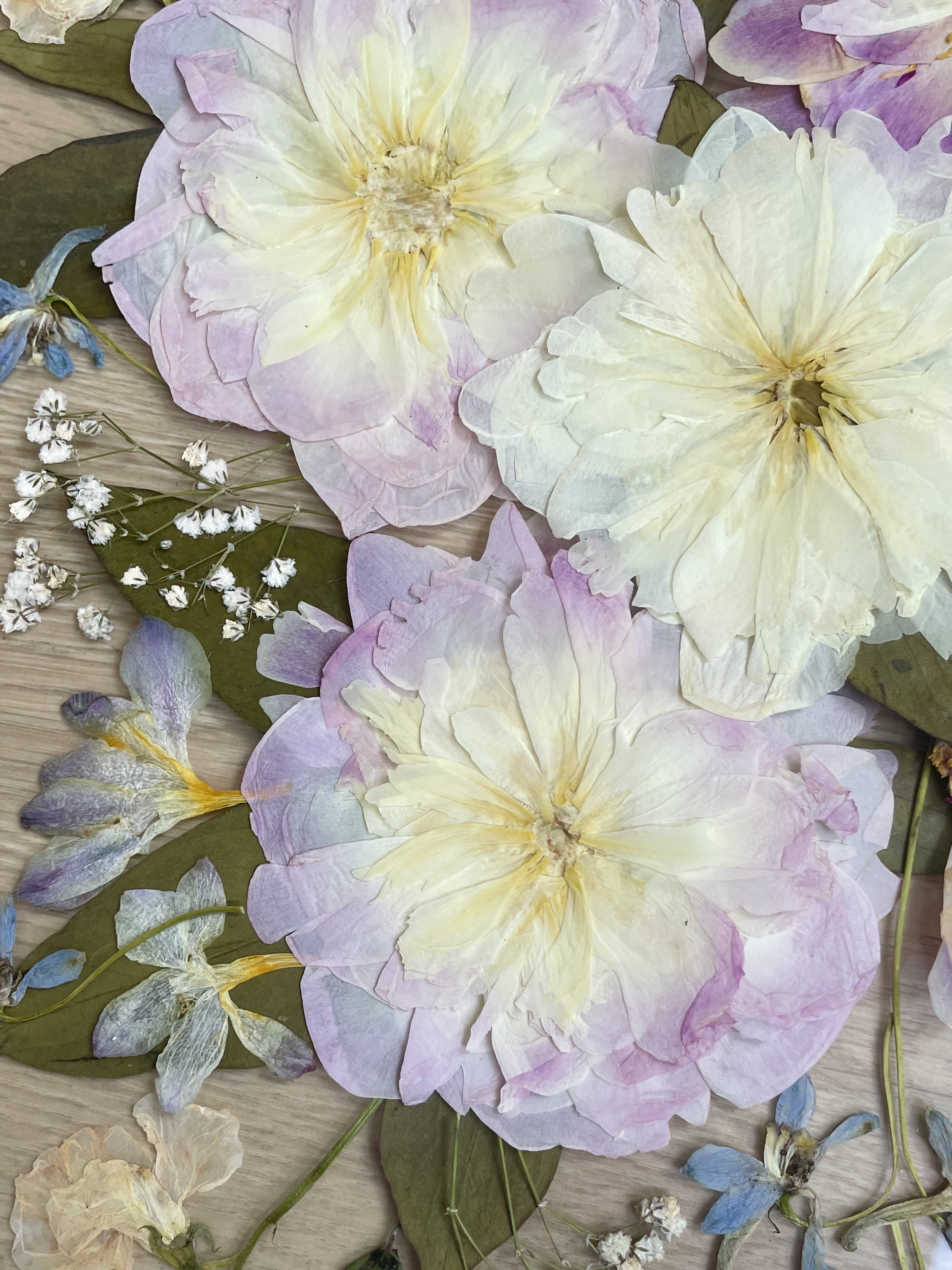
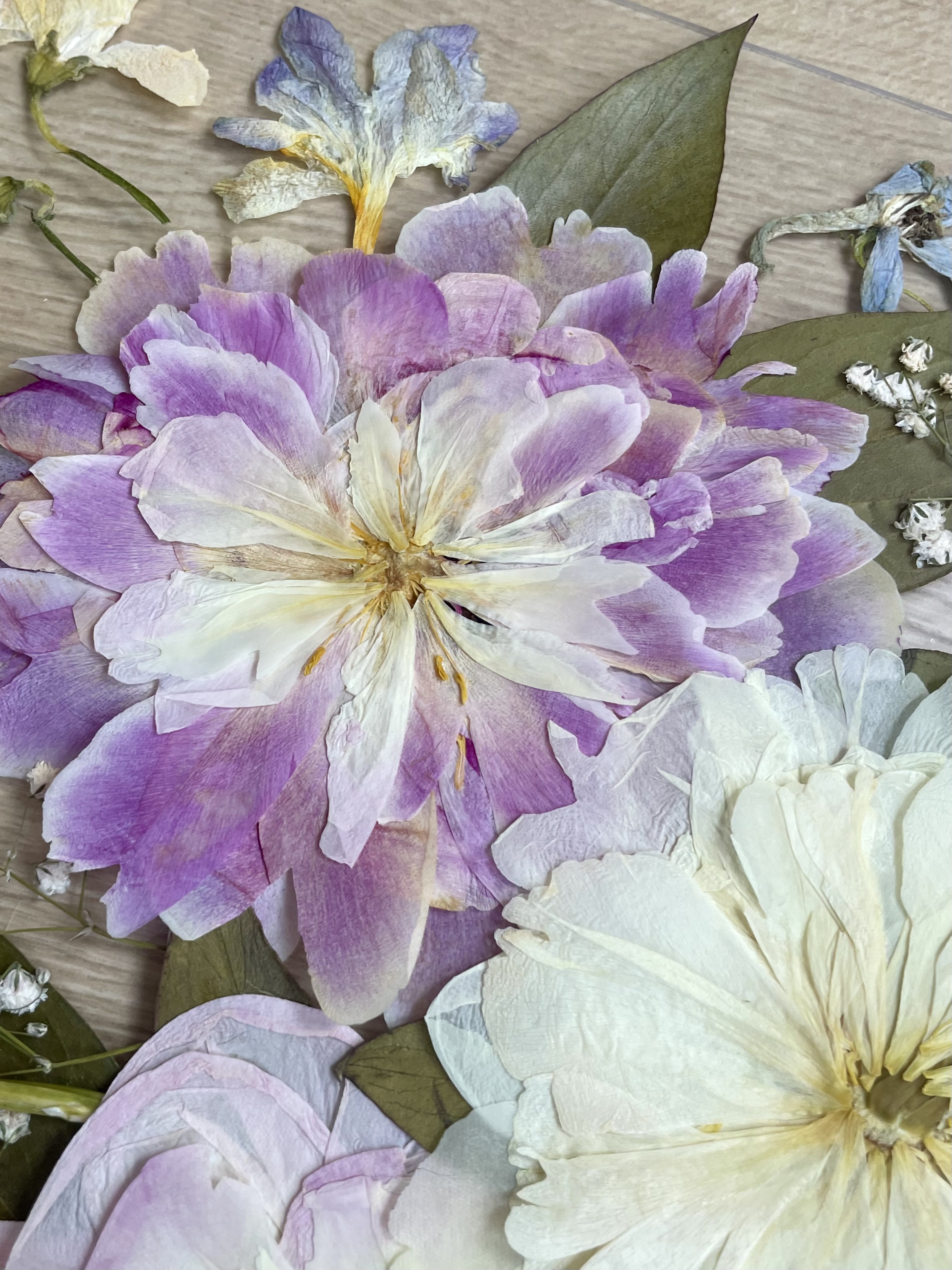
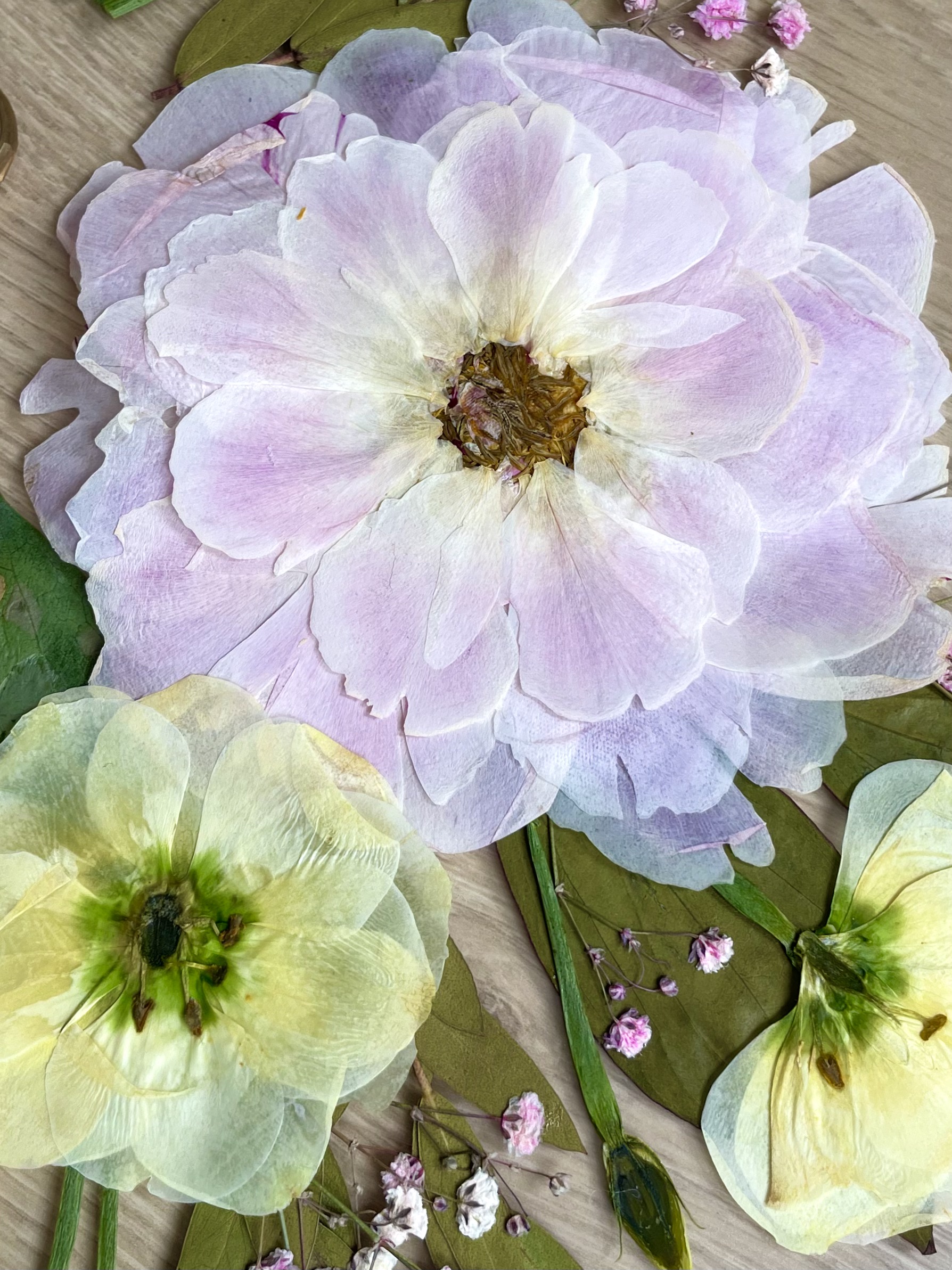
Peonies are among the most requested flowers and require special attention to press. Their heavily layered petals and high moisture content make them one of the more technical flowers to press, requiring extra care to preserve their light, delicate colors. The result speaks for itself: an almost translucent texture, beautiful irregular layers, and a soft gradation of color.
Pressed Hydrangeas
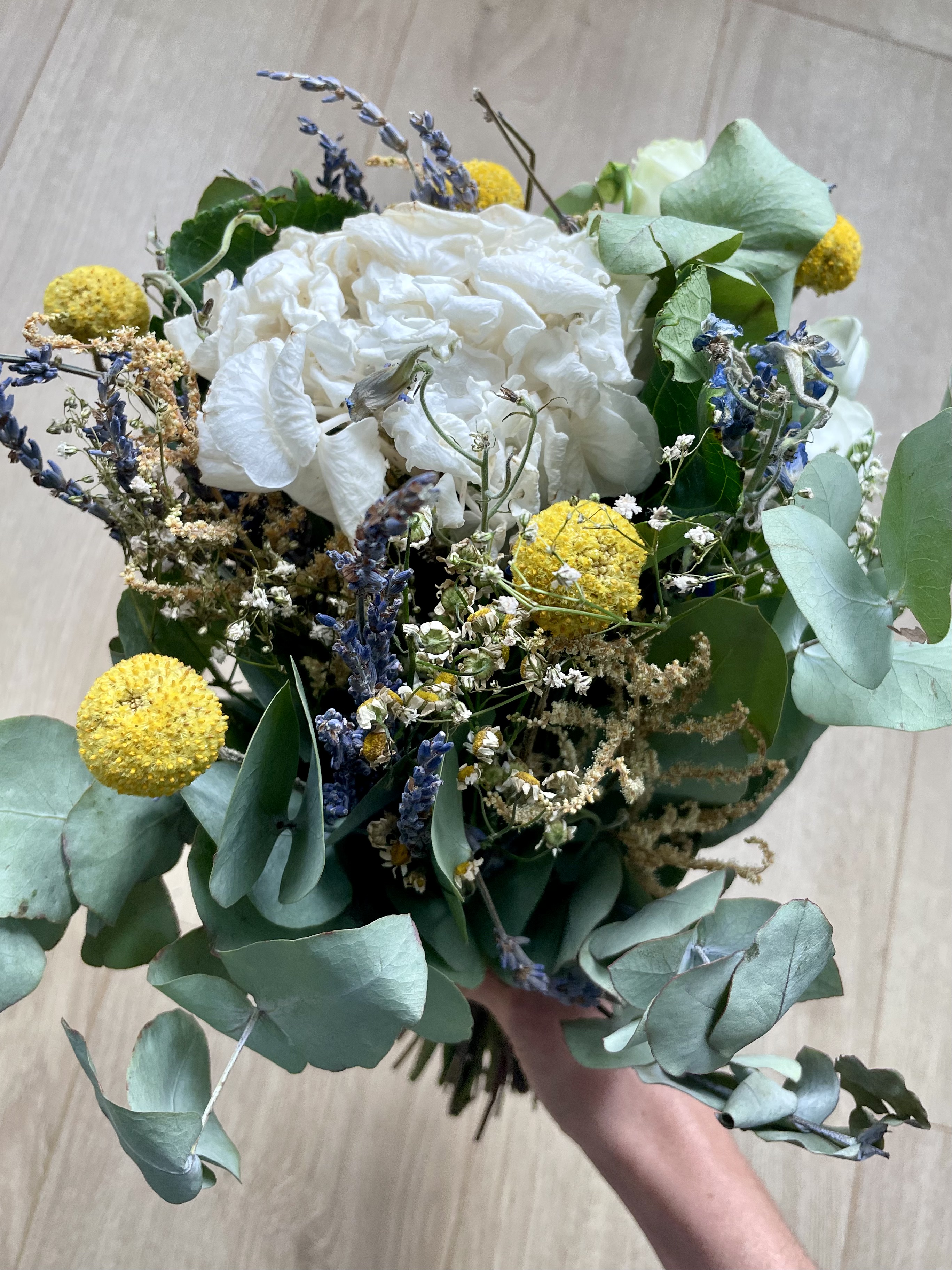
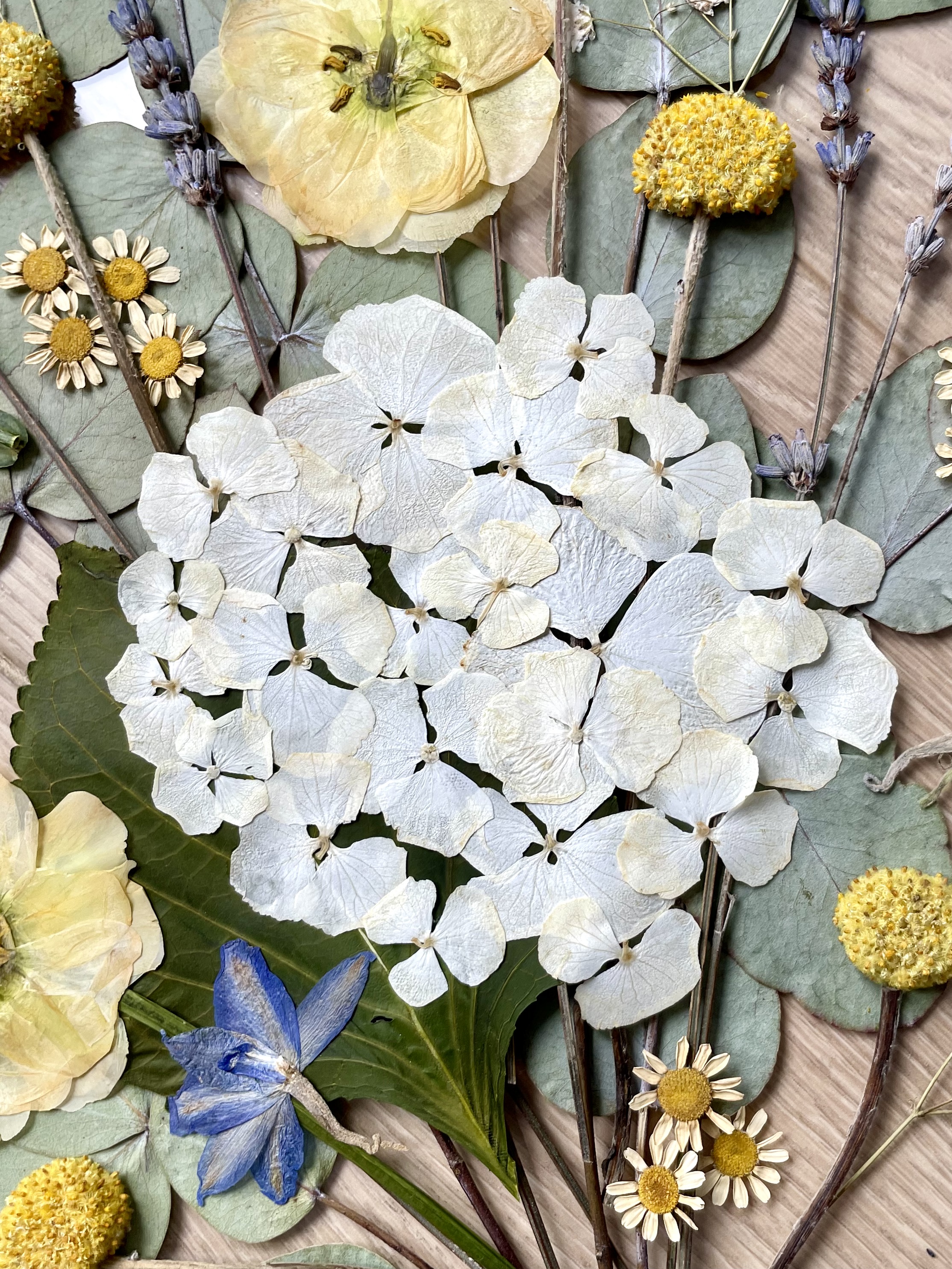
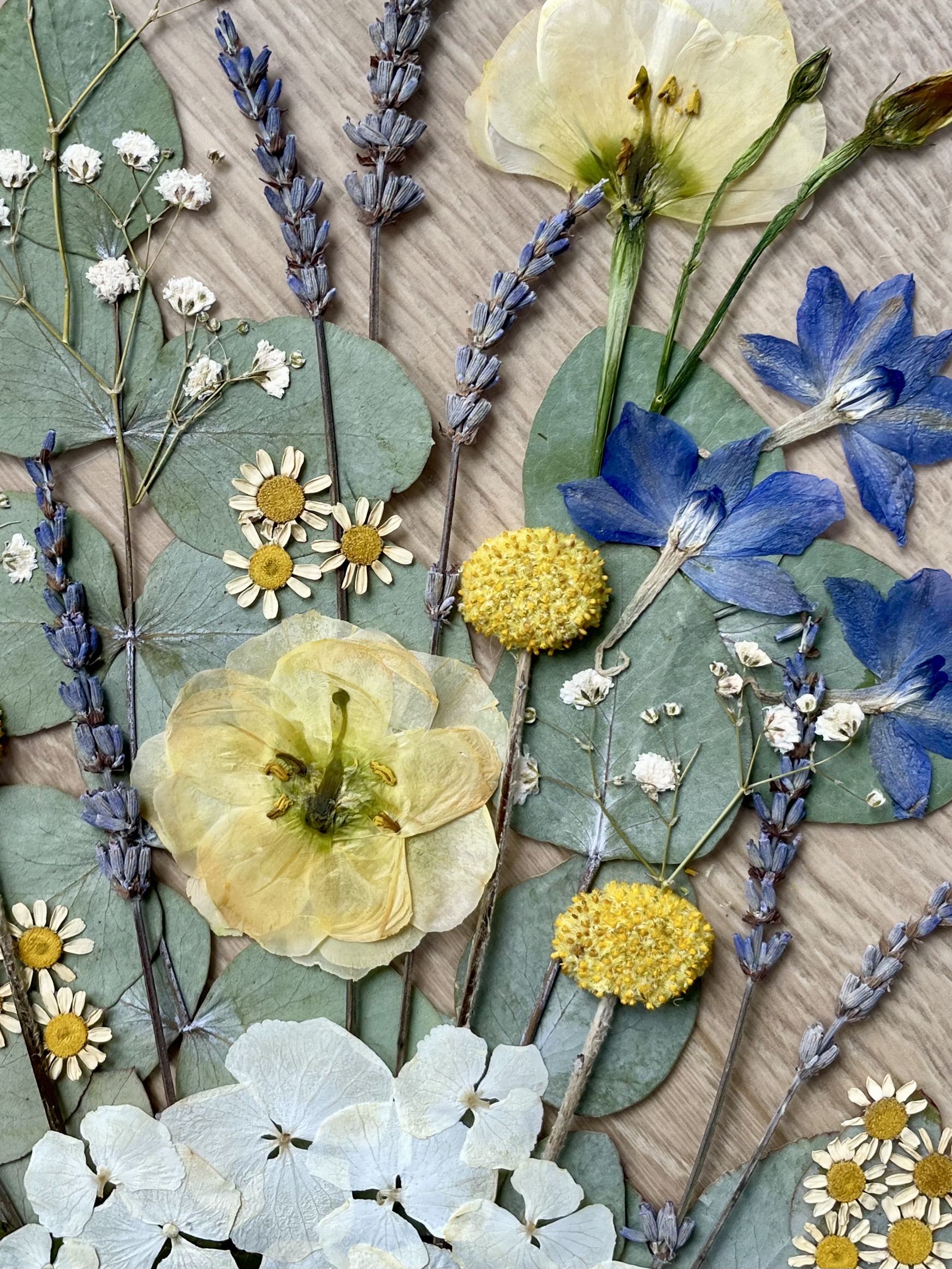
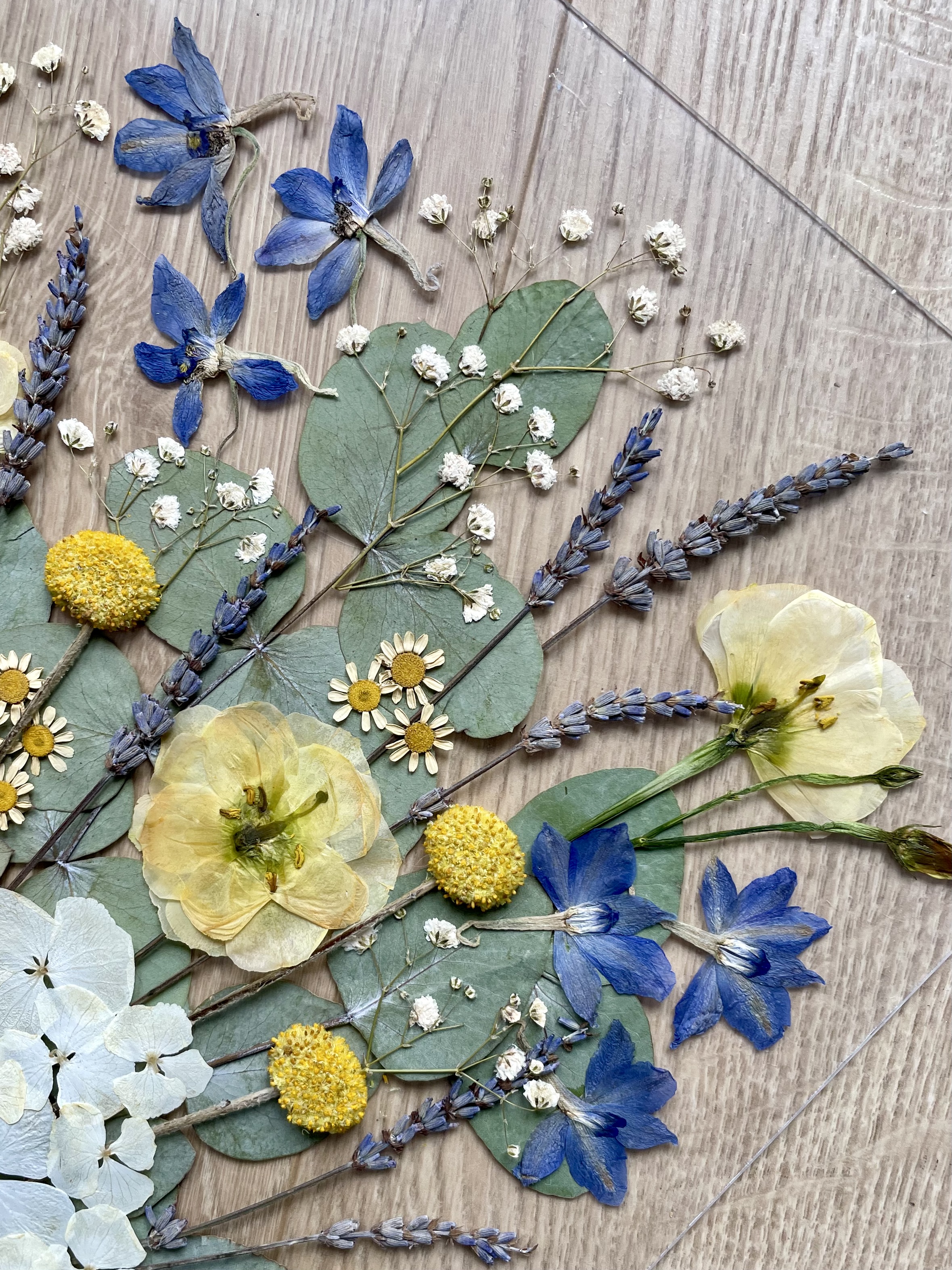
Hydrangeas (also called hortensias) are unique to press: rather than pressing the whole flower, I separate and press the individual florets, then recompose them once dry. It’s a meticulous process, but the result is airy and makes a delightful centerpiece in the final composition. White, green, and pink hydrangeas maintain their colors reliably, while blues and purples tend to shift toward mauve.
Pressed Lisianthus
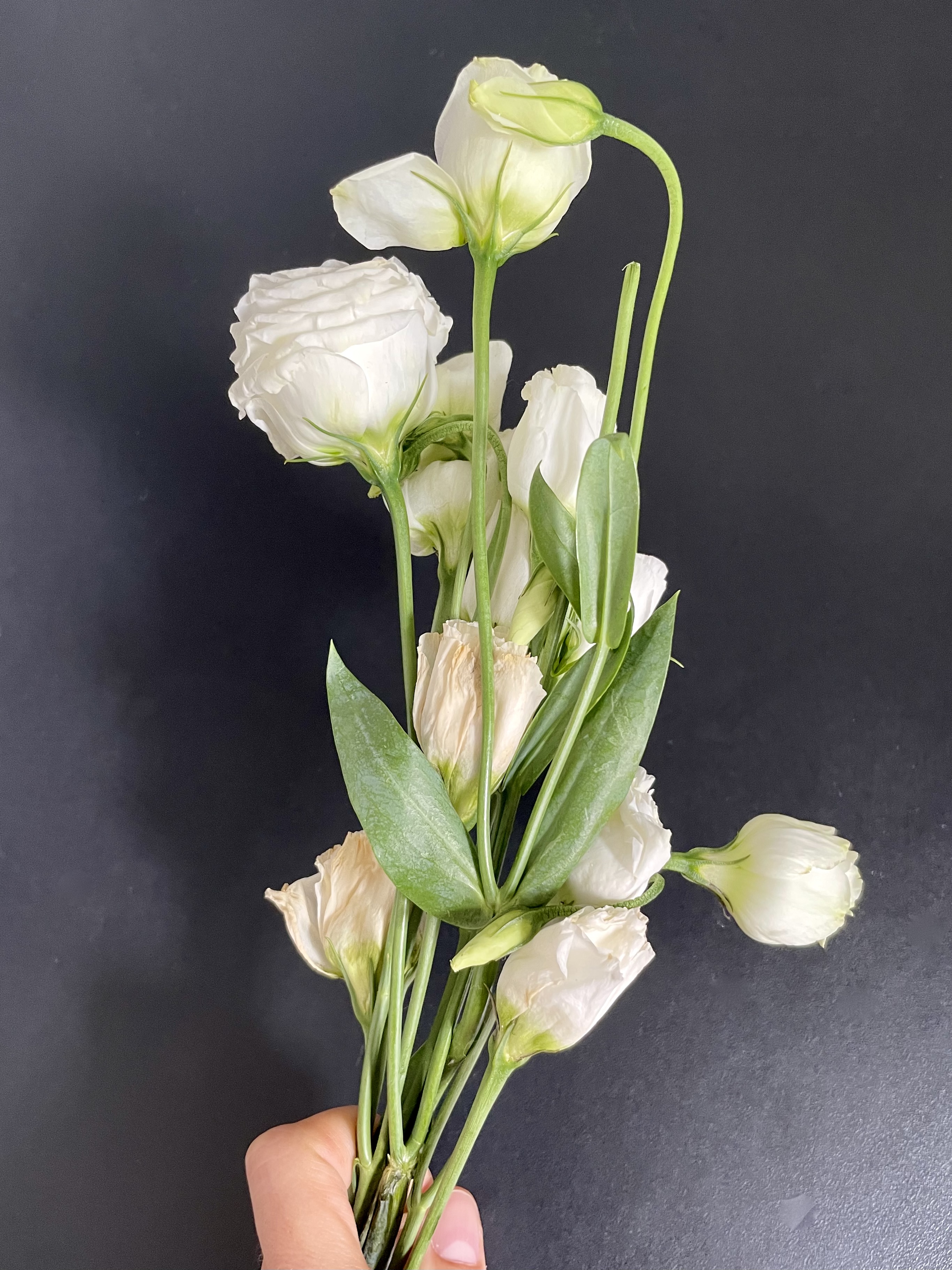
Lisianthus (also called prairie gentian) aren’t as recognizable as roses or peonies, but they are very common complementary flowers in bridal bouquets. Once pressed, their ruffled petals turn translucent and layer beautifully. But more importantly, this bright white flower will consistently shift towards a soft, pastel yellow when pressed. Just like in your bouquet, it can take various shapes, making it a perfect complement to larger flowers in a pressed flower composition.
Pressed Eucalyptus
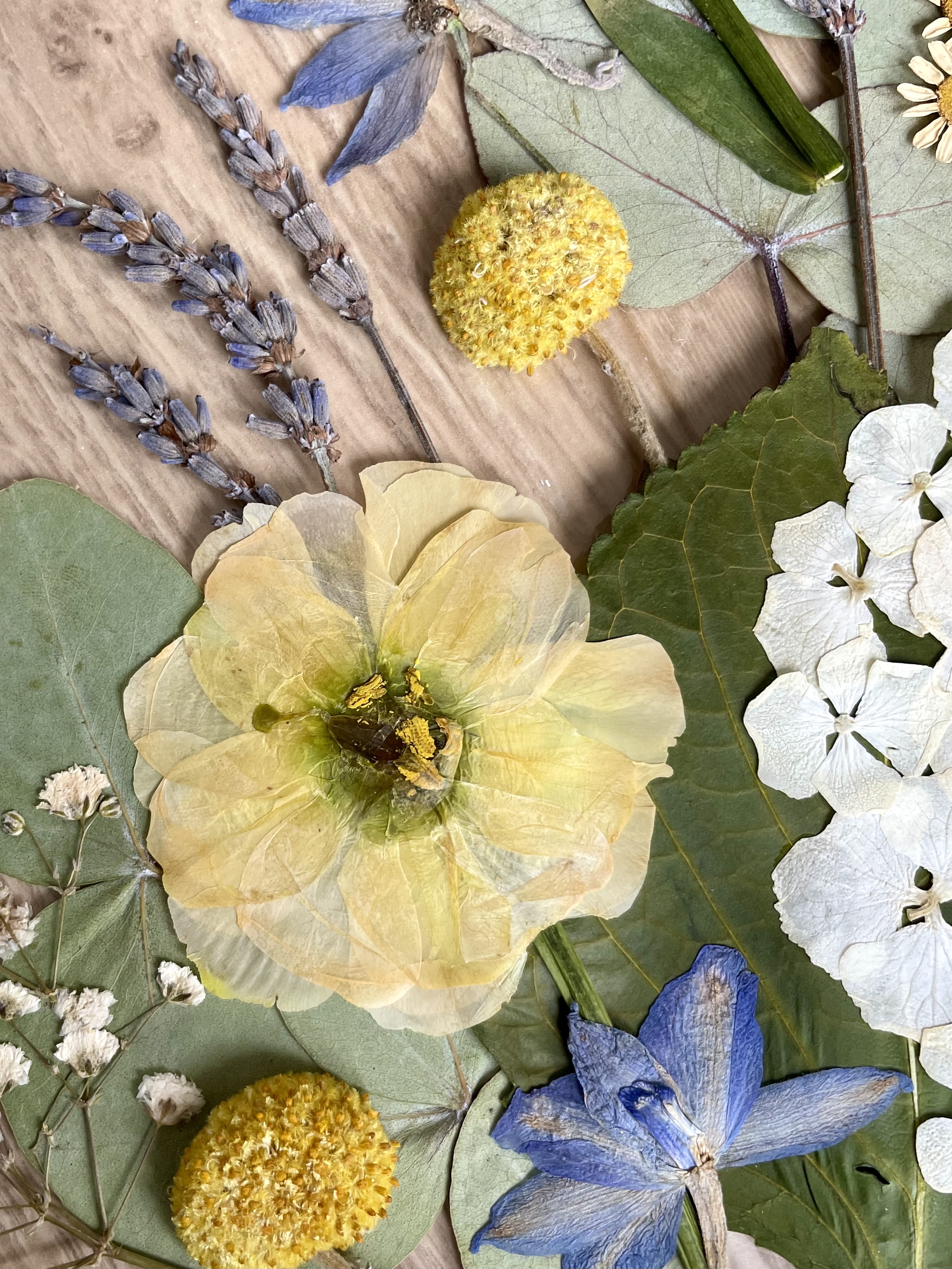
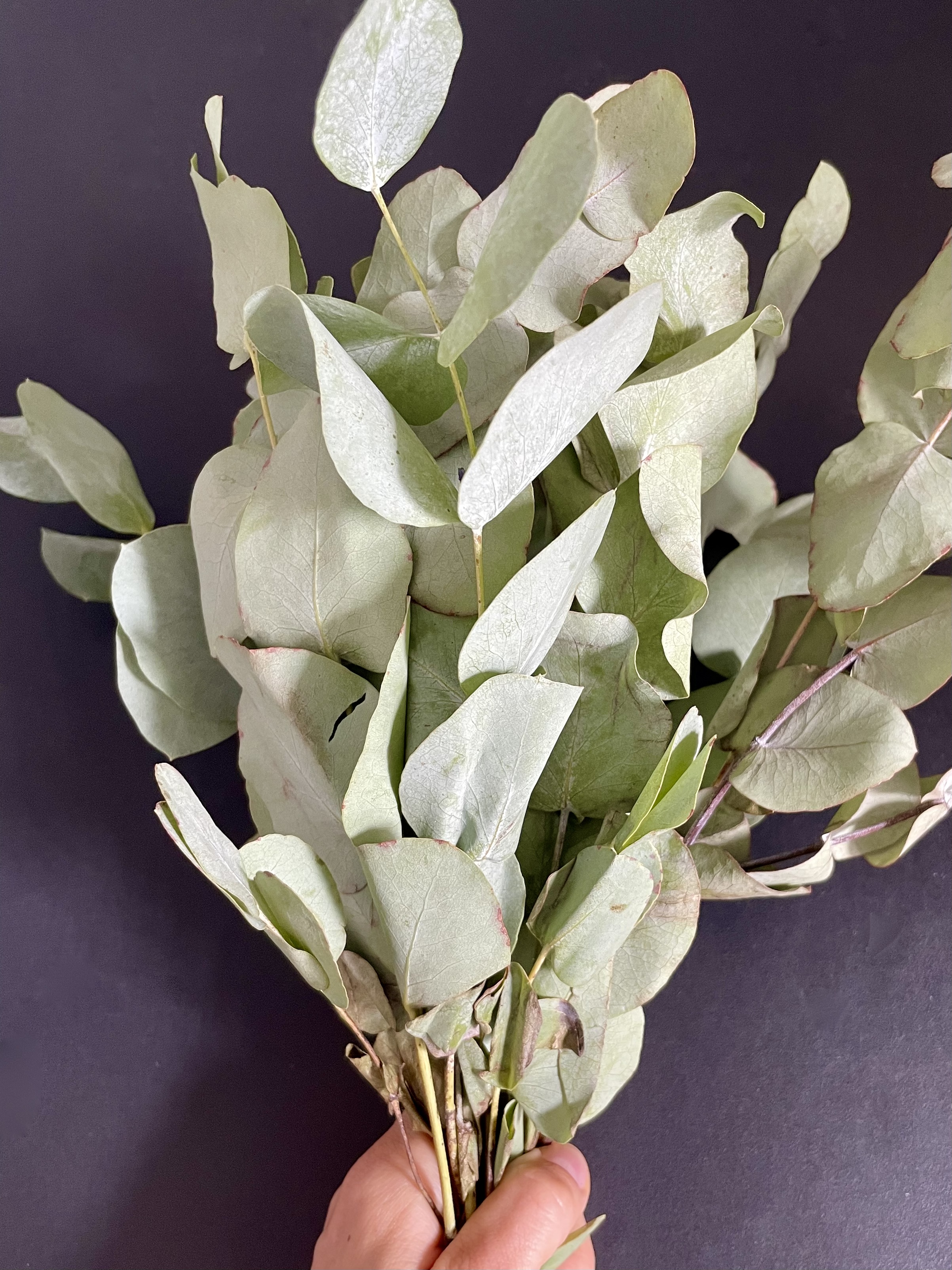
Foliage is often overlooked, but it plays an essential role in both your living and pressed bouquet. Eucalyptus is a popular choice for good reason: its shape and color add an elegant touch to any composition. It presses easily, holds its color well, and creates a rich, layered texture in the final piece.
Pressed Anemones
Anemones add a bright, colorful touch to your bouquet, even once pressed. Their deep, dark centers contrast beautifully with their petals, which flatten naturally into a shape quite similar to the original, only more translucent. Like peonies, they require extra care to prevent color loss due to their high moisture content. Some colors shift in the process – red anemones, for example, turn a deep purple once pressed – while others stay close to their original tint.
Pressed Delphinium
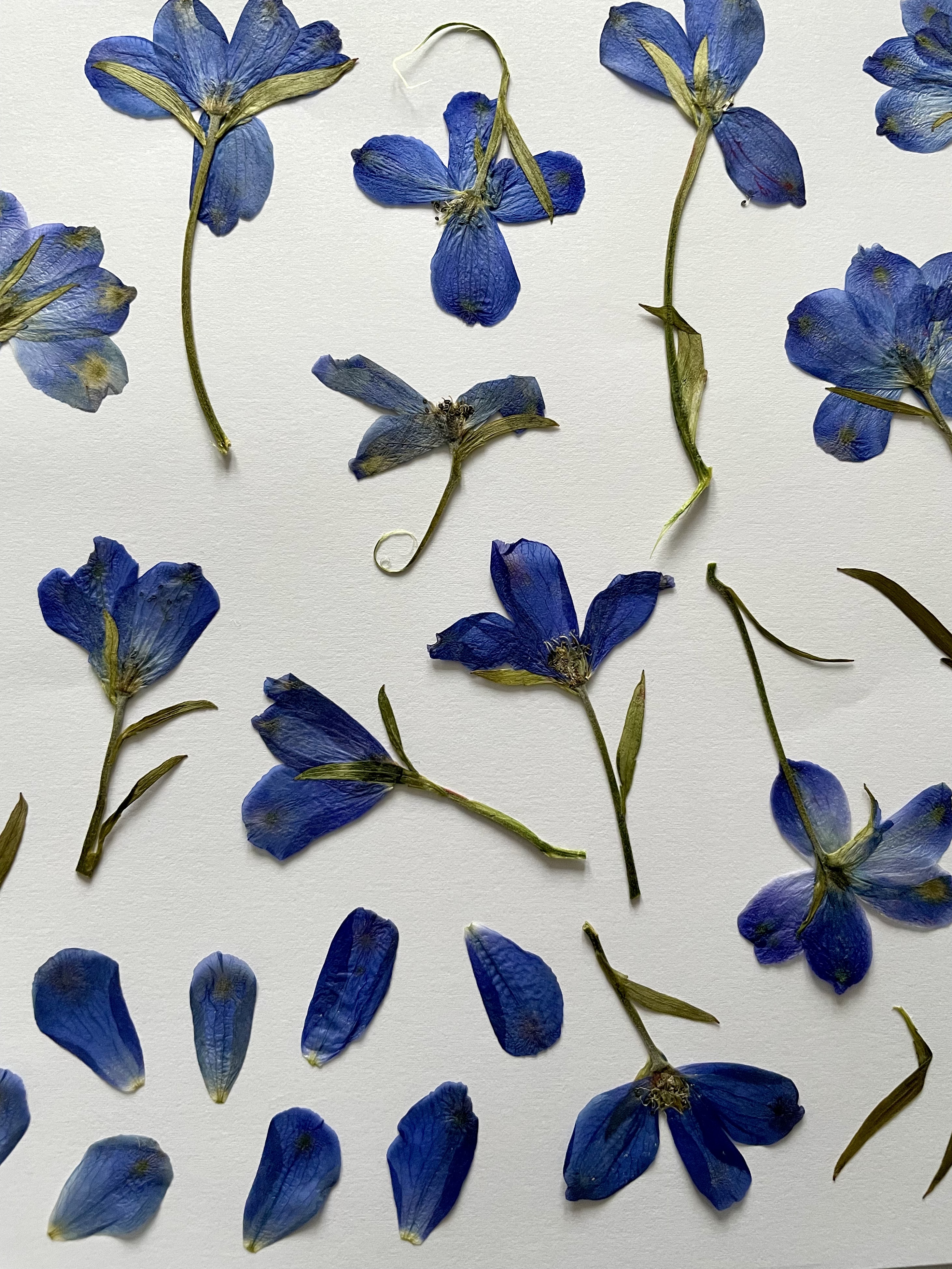
Delphinium is just as striking pressed as it is in your bouquet. Like hydrangea, the individual florets need to be separated and pressed individually, then recomposed once dry to recreate the flower’s signature cascading structure. The effort pays off: delphinium holds its color exceptionally well, and the deep blues remain vivid in the final piece.
Pressed Calla Lilies
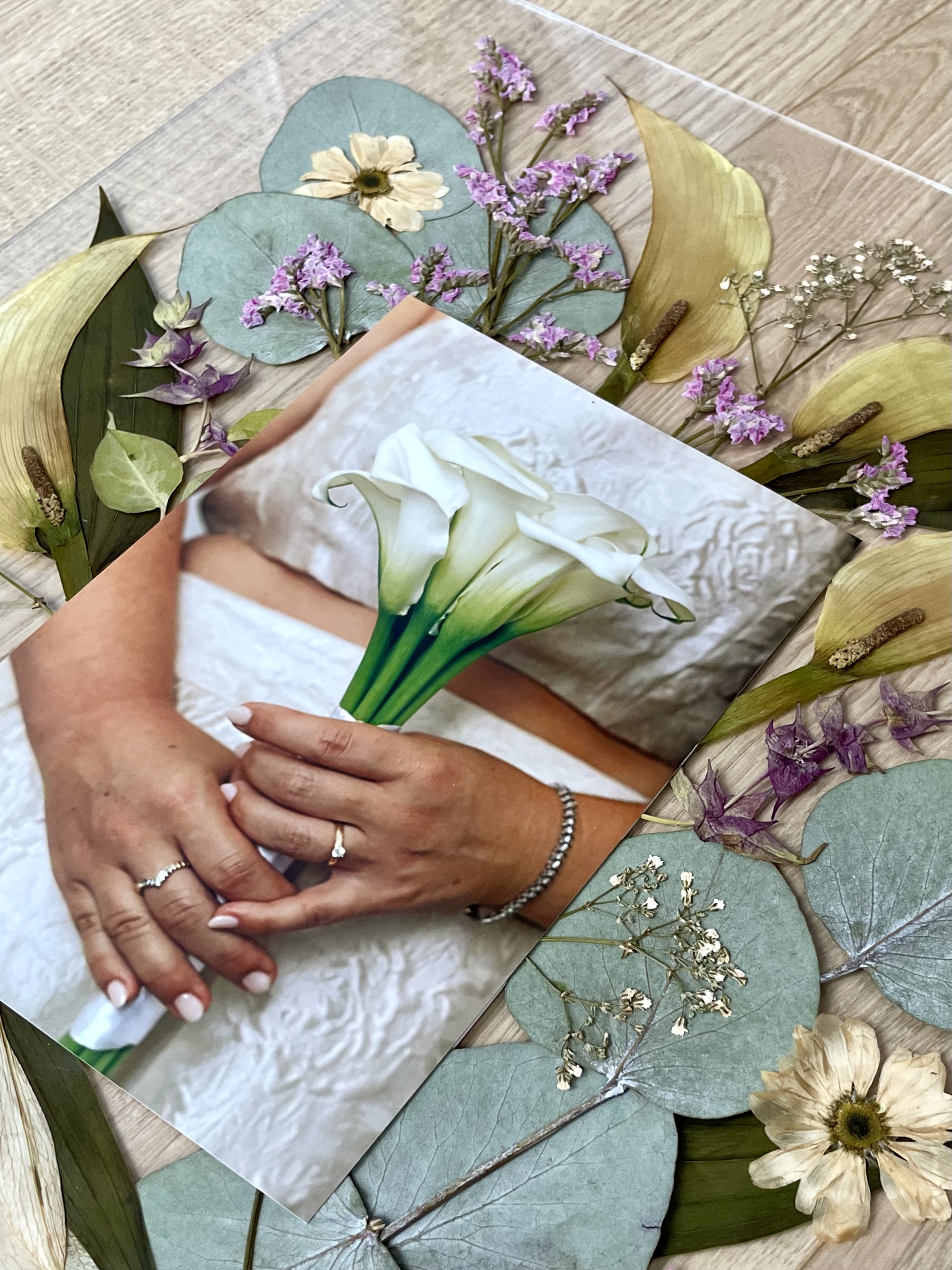
One of the most sculptural and elegant bridal flowers, and pressed, it stays immediately recognizable. The cone shape flattens into a simple, distinctive silhouette. The petals become translucent, so the final color reflects the outside of the flower rather than the brighter tones you see inside: white callas will look more beige or green, and colored calla lilies will darken. Because of their geometric shape, they look especially beautiful paired with softer, smaller flowers like wildflowers.
Your flowers will transform when pressed, yet the final composition remains a work of art as symbolic and beautiful as your original bouquet. That is precisely what I love about this work: it requires expertise, patience, and the ability to adapt to each flower, bouquet, and bride. If your flowers aren’t in this list and you’re curious how they might look pressed, feel free to reach out, I’d love to hear from you.

 Petites Pensées Papeterie